Melatonin
The molecule the night writes onto your blood — what it actually does once it is released, how two receptors turn it into a clock-setting signal, why the same molecule doubles as a mitochondrial antioxidant, and why the supplement aisle gets the dose almost exactly backwards.
A short history first. In 1958 the dermatologist Aaron Lerner, working at Yale, was hunting for a substance in the pineal gland that could lighten skin — a factor that might explain the skin-paling seen in some conditions. From the pineal glands of a quarter of a million cattle he isolated a few milligrams of a new compound that made amphibian skin go pale by aggregating the dark pigment inside melanocytes. He named it melatonin — melano- for the pigment cells it acted on, -tonin for its chemical kinship with serotonin. The pigment effect turned out to be a curiosity; the molecule turned out to be a clock. Through the 1960s, Julius Axelrod (who would share the 1970 Nobel Prize) showed that the pineal makes melatonin on a daily rhythm, high at night and low by day, and that this rhythm is driven by light through the sympathetic nervous system — converting Lerner's skin-lightening factor into the body's measurable hormone of darkness. The deepest insight came later. Through the 1980s and 1990s, Alfred Lewy, Josephine Arendt and others discovered that melatonin does not merely follow the clock — given at the right time of day it can move the clock, advancing or delaying it along a precise phase-response curve, and that the body's own evening rise (the dim-light melatonin onset) is the single most reliable marker of internal circadian time. That made melatonin the first true chronobiotic — a drug that shifts biological time. Current research has added a third identity that Lerner could not have guessed at: melatonin is one of the most effective free-radical scavengers the body possesses, concentrated in and possibly even synthesised by mitochondria, and this antioxidant role may be evolutionarily older than its job as a clock hand. This page is about all three identities of the molecule.
Why this page exists
The companion page on The Pineal Gland answers where melatonin comes from — the gland, the light-gated wiring from eye to spinal cord to neck and back, and the four-enzyme assembly line that builds melatonin from the amino acid tryptophan. That page ends where this one begins: with a pulse of melatonin pouring into the blood at night. This page is about the molecule itself — what it does once released. Most people know melatonin only as a pill labelled "sleep," and assume that more milligrams means more sleep. Almost every part of that intuition is wrong, and the reasons are mechanistic and interesting: melatonin is not a sedative, its receptors saturate at doses far below what the supplement industry sells, taking it at the wrong time can shove your clock in the wrong direction, and its most underrated action — protecting your mitochondria from oxidative damage — has nothing to do with sleep at all.
To understand melatonin properly you have to hold two completely different mechanisms in your head at once. One is a receptor-mediated signal: melatonin binds specific proteins on the surface of target cells and tells them "it is night," and where and when that message lands determines whether your clock moves earlier, later, or not at all. The other is a receptor-independent chemical action: melatonin and its breakdown products physically react with destructive molecules and neutralise them, no receptor required. The first makes melatonin a hormone and a chronobiotic; the second makes it an antioxidant. This page builds both, in order — receptors and the clock-setting signal first, then the antioxidant chemistry — and finishes with the part everyone actually needs: how swallowing a tablet of it behaves in the body, and an honest calibration of what the different doses do and do not achieve.
What melatonin is: one molecule, two jobs
Chemically, melatonin is N-acetyl-5-methoxytryptamine — a small, simple molecule built from the dietary amino acid tryptophan by way of serotonin. It is, structurally, serotonin carried two chemical steps further: an acetyl group added to its side chain and a methyl group added to its ring. The pineal gland builds it at night in four enzymatic steps, gated by the light-controlled enzyme AANAT (arylalkylamine N-acetyltransferase). That synthesis pathway — tryptophan → 5-HTP → serotonin → N-acetylserotonin → melatonin, the enzymes AANAT and ASMT, and the light-gating that makes it a night-time hormone — is covered in full on the Pineal Gland page; this page does not repeat it. What matters here is one physical property of the finished molecule, because it explains nearly everything downstream.
Melatonin is amphiphilic: it dissolves readily in both fat and water. Most signalling molecules are one or the other. A water-soluble hormone (like insulin or adrenaline) cannot cross the fatty cell membrane and so must act on receptors stuck in the membrane's outer surface. A fat-soluble hormone (like a steroid) slips straight through membranes to act inside the cell. Melatonin does both. Because it dissolves in water it travels freely in the blood and the cerebrospinal fluid and binds surface receptors; because it dissolves in fat it passes through every membrane and barrier in the body — the blood-brain barrier, the placenta, the cell membrane, and the double membrane of the mitochondrion — reaching the interior of every cell and organelle. No tissue is off-limits to it. This single property is why melatonin can be both a precise receptor-targeted signal and a diffuse, everywhere-at-once antioxidant. Hold onto it; it recurs at every stage below.
Melatonin's two jobs map directly onto these two routes of action:
- As a hormone and chronobiotic, it works through dedicated surface receptors — MT1 and MT2 — concentrated on the brain's master clock and scattered through the body's tissues. This is the information channel: a timing message.
- As an antioxidant, it works by chemistry — physically reacting with and neutralising destructive free radicals, needing no receptor at all. This is the protection channel.
We take them in that order.
The receptors: MT1 and MT2
Melatonin's timing message is read by two receptor proteins named MT1 and MT2 (the genes are MTNR1A and MTNR1B). Both belong to the largest and most-drugged family of receptors in biology, the G-protein-coupled receptors (GPCRs) — proteins that thread back and forth across the cell membrane seven times, presenting a binding pocket on the outside and, when a molecule docks there, changing shape to trigger machinery on the inside. The "G protein" is the inner switch they flip.
Both MT1 and MT2 couple to the inhibitory class of G protein, called Gi. The naming tells you what they do: when melatonin binds, the Gi protein lowers the level of a key intracellular messenger called cyclic AMP (cAMP). cAMP is a near-universal "go" signal inside cells — it is the very messenger that rises in the pineal at night to switch melatonin synthesis on (see the Pineal page). So a melatonin receptor firing is, at its core, a quieting signal: it turns the cAMP volume down in whatever cell it sits on, and through that and a few parallel pathways (including effects on potassium and calcium channels) it changes how excitable that cell is. This is the molecular reason melatonin is a damping, settling signal rather than a stimulating one.
The two receptors are about 55% identical in their amino-acid sequence (around 70% within the membrane-spanning core), bind melatonin with similarly high affinity, and are often found on the very same cells — but they are not redundant. They differ in where they are most densely expressed and in the downstream behaviour they produce, and teasing the two apart is the central project of melatonin pharmacology.
Where the receptors are, and what each does
MT1 is the receptor most associated with the acute, settling, sleep-permissive action and with directly quietening the master clock.
- In the suprachiasmatic nucleus (SCN) — the ~20,000-neuron master clock in the hypothalamus (introduced on the Pineal page) — MT1 activation suppresses the electrical firing of the clock neurons. During the day the SCN fires fast, broadcasting "it is daytime" to the rest of the brain and actively holding you awake. By binding MT1, the evening melatonin tide turns that daytime alerting signal down, lowering the wake drive. This is the heart of why melatonin "opens the sleep gate": it is not knocking you out, it is removing the clock's wakefulness signal.
- MT1 is also expressed widely in the periphery — on blood vessels, in the cardiovascular system, the kidney, pancreatic islets, fat tissue, and the immune system — where the same Gi/cAMP-lowering action carries the "it is night" message into metabolic and vascular tissues.
MT2 is the receptor most associated with the clock-shifting (phase-resetting) action and with fine-tuning sleep structure.
- In the SCN, MT2 activation is the route through which melatonin shifts the phase of the clock — moving the whole rhythm earlier or later in time. (We unpack the directionality, the phase-response curve, in the next section.) When researchers want to attribute melatonin's clock-resetting power to a receptor, the evidence points chiefly at MT2.
- MT2 is also strongly expressed in the retina and appears to modulate the balance of REM and non-REM sleep and aspects of sleep depth, distinct from MT1's role in sleep onset.
A useful way to remember the division of labour: MT1 turns the clock's volume down (sleep onset, suppressing alertness); MT2 turns the clock's hands (phase-shifting, resetting time). The split is not absolute — both receptors contribute to both functions, and in many tissues they work together, even physically pairing up into dimers — but it is the cleanest mental model, and it is exactly the model that drug designers use.
flowchart TD
MEL["Melatonin<br/>(N-acetyl-5-methoxytryptamine)"] --> MT1["MT1 receptor<br/>(Gi-coupled GPCR)"]
MEL --> MT2["MT2 receptor<br/>(Gi-coupled GPCR)"]
MT1 -->|"lowers cAMP"| A1["SCN: suppress neuron firing<br/>= turn DOWN the wake drive"]
MT1 --> A2["Periphery: vessels, pancreas,<br/>immune, metabolic 'it is night' cue"]
MT2 -->|"lowers cAMP"| B1["SCN: shift the clock's PHASE<br/>(reset internal time)"]
MT2 --> B2["Retina + sleep architecture<br/>(REM / NREM balance)"]
A1 --> ONSET["Sleep onset / lowered alertness"]
B1 --> SHIFT["Chronobiotic: advance or delay rhythm"]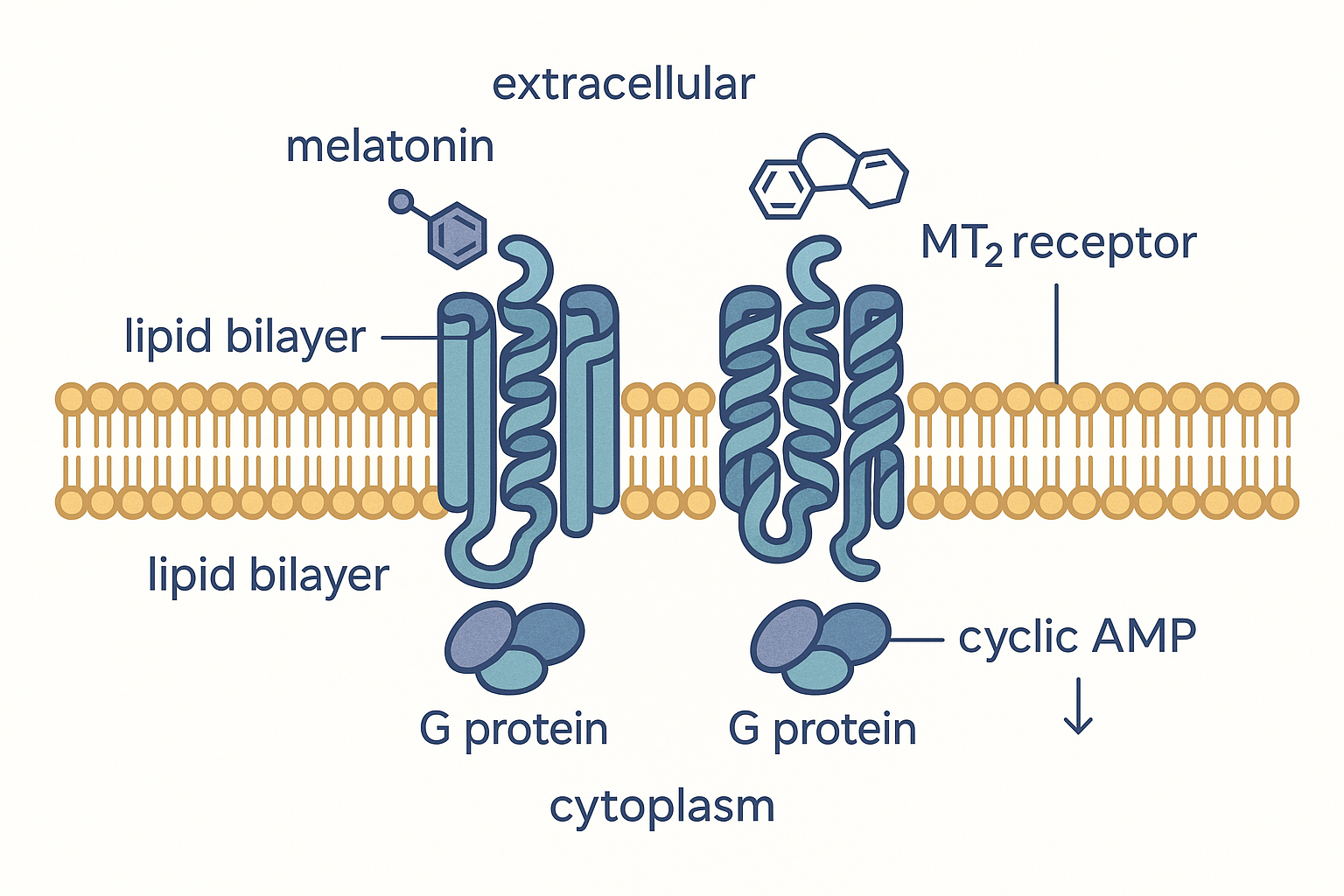 Melatonin's timing signal is read by two surface receptors, MT1 and MT2 — seven-pass GPCRs that, when melatonin docks, activate an inhibitory Gi protein and lower intracellular cyclic AMP, the molecular basis of melatonin's quietening, clock-modulating action.
A note on the nuclear and orphan receptors
Beyond MT1 and MT2 you may encounter two other supposed melatonin targets, and they deserve honest calibration because they are often overstated. The first is a third binding site historically called MT3, which turned out not to be a signalling receptor at all but the enzyme quinone reductase 2 — relevant to detoxification chemistry rather than to timing. The second is the RZR/ROR family of nuclear receptors — transcription factors inside the cell that switch genes on and off. For years melatonin was claimed to bind these directly and thereby act like a steroid hormone on gene expression. The current, more sober view is that direct, high-affinity binding of physiological melatonin to ROR receptors is not well established; melatonin's genuine effects on gene expression are now thought to run mostly indirectly, through the MT1/MT2 → cAMP route changing the activity of downstream transcription factors. So the safe statement is: melatonin's signalling runs through MT1 and MT2; claims of a direct nuclear-receptor mechanism should be held loosely.
The chronobiotic action: how melatonin moves the clock
This is melatonin's most powerful and least understood property, and the place where intuition fails hardest. Melatonin does not just tell the body it is night — taken at the right moment, it can shift what time the body thinks it is. A molecule that can move the phase of the circadian clock is called a chronobiotic, and melatonin is the prototype.
To see how, we need one more concept from the Pineal page: the SCN runs an internal ~24-hour rhythm, and that rhythm has a phase — a position in its cycle, like the position of a clock's hands. The body's own melatonin rises in the evening, peaks around 2–4 a.m., and falls by dawn. Crucially, the SCN is densely covered in MT1 and MT2 receptors, so the clock reads its own output: the melatonin the clock causes to be made feeds back onto the clock. This is a closed loop. And it means that putting extra melatonin into the system — at a chosen time — can nudge the loop.
The phase-response curve
Whether melatonin shifts the clock earlier or later depends entirely on when it arrives relative to the body's own rhythm. Plot the size and direction of the shift against the time of administration and you get the melatonin phase-response curve (PRC) — one of the most important diagrams in all of chronobiology. Its shape is simple to state:
- Melatonin in the late afternoon and evening — before the body's own melatonin would rise — ADVANCES the clock (shifts everything earlier). The advancing effect is largest when melatonin is taken several hours before your natural evening melatonin onset (roughly 3–6 hours before, putting the peak of the advance zone in the afternoon/early evening).
- Melatonin in the late night and morning — after the body's own peak, around and after waking — DELAYS the clock (shifts everything later). The delaying effect peaks some hours after the natural melatonin onset, near the usual time of waking.
- In the middle of the biological night, when your own melatonin is already high, extra melatonin produces little phase shift — the signal is already saturated.
The single most important fact about this curve is that it is roughly the mirror image of the light phase-response curve, offset by about twelve hours. Light and melatonin are opposite-signed clock signals:
| Signal | Evening / before sleep | Morning / after waking |
|---|---|---|
| Bright light | delays the clock (pushes later) | advances the clock (pulls earlier) |
| Melatonin | advances the clock (pulls earlier) | delays the clock (pushes later) |
This symmetry is not a coincidence — it falls straight out of the wiring. Light, via the eye and SCN, signals "day"; melatonin signals "night." A burst of "night" in the evening tells the clock dusk has come early, so it runs ahead; a burst of "night" in the morning tells the clock it is still dark, so it lags behind. Light does exactly the reverse. The practical upshot is enormous: light and well-timed melatonin are complementary tools for moving the clock, and using them together (e.g. morning bright light plus afternoon/evening melatonin to advance a delayed sleep phase) pushes harder than either alone.
flowchart TD
Q{"When is melatonin taken,<br/>relative to body's own<br/>melatonin onset (DLMO)?"}
Q -->|"Hours BEFORE onset<br/>(afternoon / evening)"| ADV["Clock ADVANCES<br/>sleep + wake move EARLIER"]
Q -->|"Mid-biological-night<br/>(own melatonin already high)"| NIL["Little / no phase shift<br/>signal saturated"]
Q -->|"Late night / morning<br/>(at or after waking)"| DEL["Clock DELAYS<br/>sleep + wake move LATER"]
ADV --> USE1["Use: jet lag EASTWARD,<br/>delayed sleep phase (night owls)"]
DEL --> USE2["Use: jet lag WESTWARD,<br/>advanced sleep phase (early larks)"]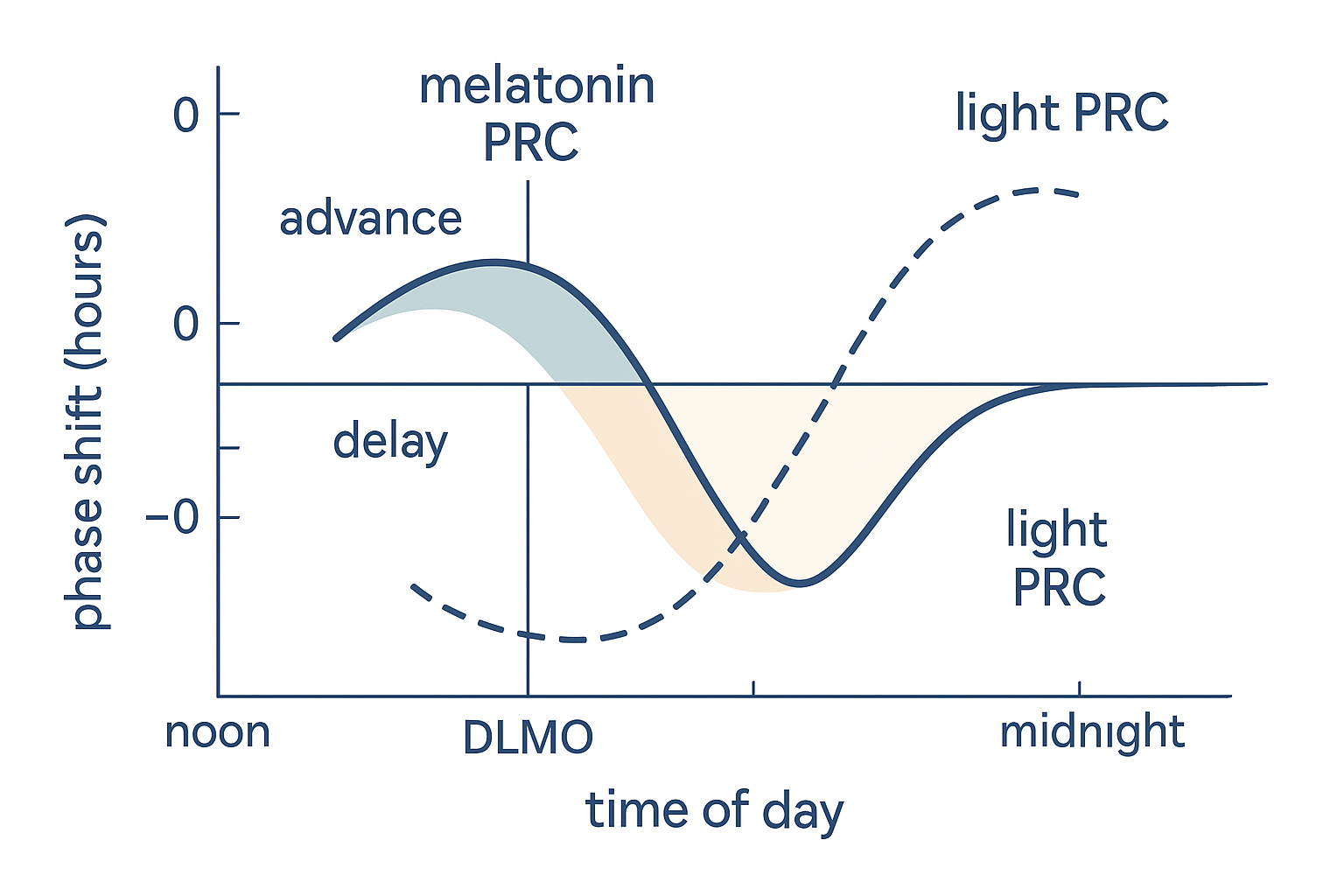 The melatonin phase-response curve (taking melatonin in the evening pulls the clock earlier; in the morning, later) is roughly the mirror image of the light phase-response curve, offset by about twelve hours — which is why timed light and timed melatonin are complementary levers on circadian phase.
DLMO: reading the clock
To time melatonin (or light) correctly, you need to know what time the clock actually reads — which is not the same as clock-on-the-wall time, and differs between a lark and an owl by hours. The gold-standard readout is the dim-light melatonin onset (DLMO): the clock time at which the body's own melatonin begins its evening rise, measured (in saliva or blood) under dim light, because ordinary room light suppresses melatonin and corrupts the measurement. DLMO typically occurs about two hours before habitual sleep onset and is the single most stable, reliable marker of internal circadian phase available. Every point on the phase-response curve above is referenced to DLMO, not to the clock on the wall — "evening melatonin advances the clock" precisely means "melatonin taken some hours before your DLMO advances the clock." This is why serious circadian medicine measures DLMO before prescribing the timing of light or melatonin: it locates the clock's hands before trying to move them.
Thermoregulation: melatonin lowers your core temperature
Alongside the clock-shifting signal, melatonin pulls a physiological lever that is itself a sleep trigger: it lowers core body temperature. Human core temperature naturally falls in the evening and reaches its trough in the second half of the night, and this dip is part of the sleep-promoting state — the brain initiates sleep more readily on a falling temperature curve. Melatonin contributes to the dip by promoting distal vasodilation: it widens the blood vessels in the skin of the hands and feet, increasing blood flow to the body's surface so that heat radiates away and the core cools. (This is why warm hands and feet at bedtime — counter-intuitively — predict faster sleep onset: they signal that the body is dumping heat.) Evening melatonin, endogenous or supplemental, deepens this distal-vasodilation-and-core-cooling response, providing a second, receptor-mediated route by which it tilts the body toward sleep that is entirely separate from "sedation."
The hidden job: melatonin as a mitochondrial antioxidant
Now the second mechanism — the one with no receptor, the one Lerner could not have anticipated, and arguably the more ancient. Melatonin is one of the most effective antioxidants in human biology, and to see why it is worth understanding the problem it solves.
Every cell that makes energy pays a tax in damage. The mitochondrion — the organelle that produces most of the cell's ATP by running electrons down its electron transport chain (covered on the Cellular Energy page) — inevitably leaks some of those electrons onto oxygen prematurely, generating reactive oxygen species (ROS): the superoxide radical, hydrogen peroxide, and, most dangerously, the hydroxyl radical, which will rip an electron out of almost any molecule it touches — DNA, proteins, the fatty membranes themselves. A free radical is simply a molecule with an unpaired electron, which makes it ferociously reactive; left unchecked, ROS drive a chain reaction of oxidative damage that is a central mechanism of ageing and of nearly every degenerative disease. The mitochondrion is both the main source of ROS and, because the damage happens right there, the main victim. Whatever is going to protect the cell's energy machinery has to get inside the mitochondrion.
Melatonin is unusually well-built for exactly this. Several features stack up:
- It is a direct free-radical scavenger. Melatonin chemically reacts with and neutralises the most destructive radicals — the hydroxyl radical and peroxynitrite (a nitrogen-containing oxidant) chief among them — by donating an electron to quench them, no receptor and no enzyme required. It is a broad-spectrum scavenger, mopping up several radical species rather than just one.
- It is a cascade ("suicide") scavenger. This is the property that sets it apart from ordinary antioxidants. When most antioxidants neutralise a radical they themselves become a (milder) radical and are spent. When melatonin neutralises a radical, its breakdown products are also antioxidants: melatonin → AFMK (N1-acetyl-N2-formyl-5-methoxykynuramine) → AMK (N1-acetyl-5-methoxykynuramine), and each of these metabolites can itself neutralise further radicals. One melatonin molecule can therefore disarm a succession of radicals down a chain — a single scavenging event becomes several. This makes it far more efficient, per molecule, than a one-shot antioxidant.
- It concentrates exactly where the damage is — the mitochondrion. Because melatonin is amphiphilic (that property again), it crosses the mitochondrion's double membrane and accumulates in the matrix to concentrations well above those in the blood. It targets the very site of ROS generation. And there is now substantial evidence that mitochondria can synthesise their own melatonin locally — they contain the machinery, and they appear to manufacture it on the spot to protect themselves. This is the basis of the striking hypothesis that melatonin's original function, in the earliest cells billions of years ago, was as a mitochondrial antioxidant, and that its later recruitment as a darkness-signalling hormone was an evolutionary afterthought. The molecule that times your sleep may have started life protecting a bacterium's energy machinery from oxygen.
- It recharges the rest of the antioxidant defence. Beyond scavenging directly, melatonin upregulates the cell's own protective enzymes — superoxide dismutase, glutathione peroxidase, catalase — and supports the regeneration of glutathione, the cell's master antioxidant. So it raises the whole defensive baseline, not just the front-line scavenging.
The honest calibration: the receptor-mediated timing role is fully established and operates at the low concentrations the body naturally produces. The antioxidant role is real and mechanistically well-characterised in cells and tissues, but the concentrations at which it becomes quantitatively dominant are higher than the night-time physiological blood level — which is part of the rationale (still being researched) behind high-dose melatonin in disease states such as sepsis, ischaemia-reperfusion injury and neurodegeneration, contexts entirely separate from using it as a sleep aid. The two uses live at opposite ends of the dose range, and conflating them is a common error.
flowchart LR
ETC["Electron transport chain<br/>(inner mito membrane)"] -->|"electron leak"| ROS["ROS: superoxide,<br/>H2O2, hydroxyl radical"]
ROS -->|"oxidative damage"| HARM["DNA, proteins,<br/>membrane lipids"]
MEL["Melatonin<br/>(enters matrix; made locally)"] -->|"donates electron, scavenges"| ROS
MEL --> AFMK["AFMK"] --> AMK["AMK"]
AFMK -->|"also scavenges"| ROS
AMK -->|"also scavenges"| ROS
MEL -->|"upregulates"| ENZ["SOD, glutathione<br/>peroxidase, catalase"]
ENZ --> ROS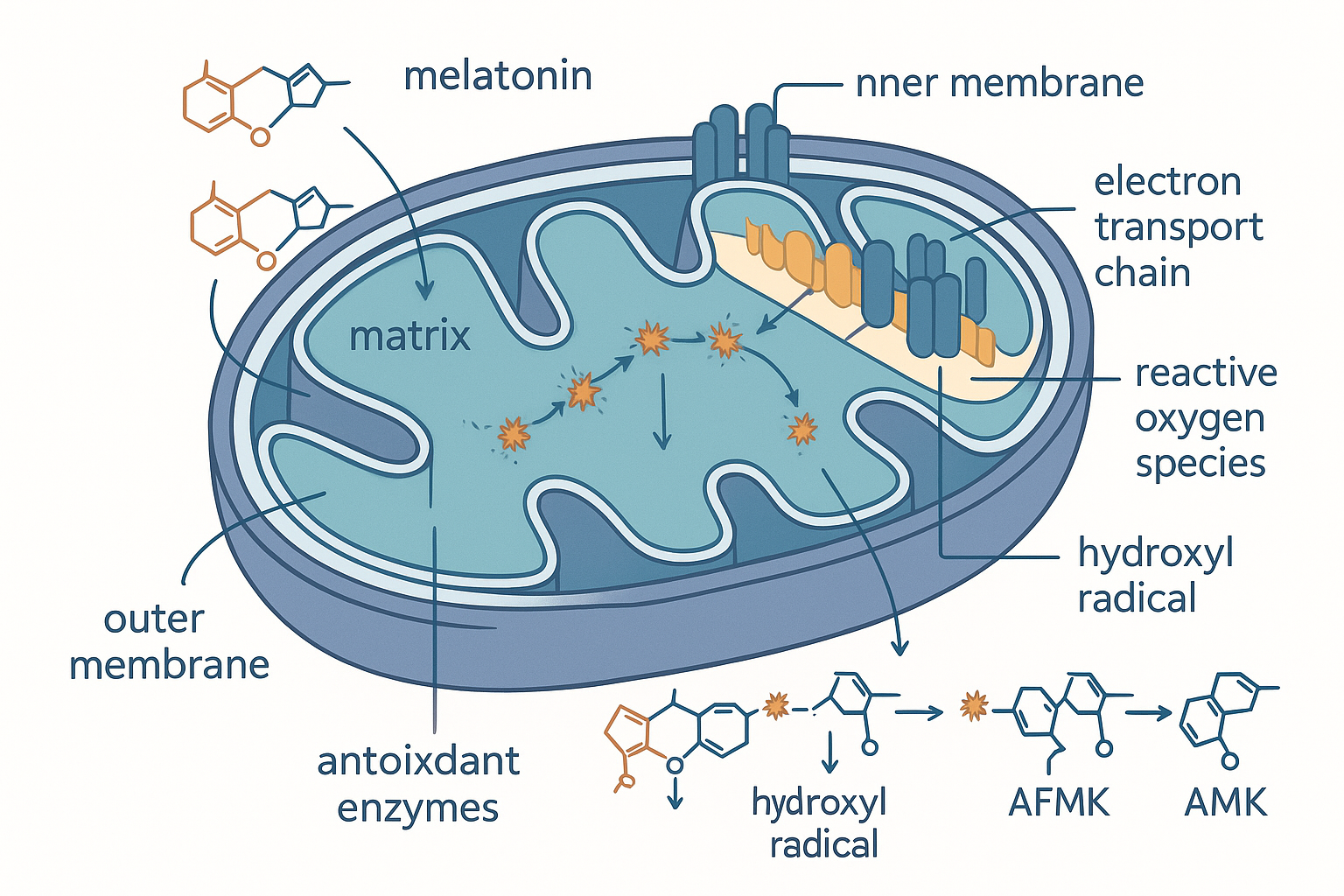 Melatonin's receptor-independent job: amphiphilic, it diffuses into the mitochondrial matrix — the very site where the electron transport chain leaks reactive oxygen species — and scavenges radicals directly, with its metabolites AFMK and AMK continuing the cascade, while also upregulating the cell's own antioxidant enzymes.
A brief word on the other peripheral roles
Through the same two channels — receptor signalling and antioxidant chemistry — melatonin touches several other systems, which we note briefly for completeness rather than expand here. It modulates immune function (broadly immune-supportive and anti-inflammatory at physiological levels, via MT1/MT2 on immune cells and via dampening of inflammatory ROS). It has metabolic effects: the MT2 gene (MTNR1B) carries one of the best-replicated common genetic variants associated with raised fasting glucose and type-2-diabetes risk, a reminder that the nightly melatonin signal is read by the pancreas and that the timing of food relative to melatonin matters metabolically (eating during high melatonin appears to impair glucose handling). And melatonin is produced locally in many tissues beyond the pineal — notably the gut, retina, skin and immune cells — where it acts in a paracrine (local) fashion rather than as a circulating hormone; the gut in particular contains far more melatonin than the pineal, used locally rather than broadcast. These are real and active research areas, but the two load-bearing ideas for this page remain the chronobiotic signal and the mitochondrial antioxidant.
Why melatonin falls with age
The amplitude of the nightly melatonin pulse is not fixed for life — it declines steadily with age, and this is one of the clearest endocrine signatures of getting older. Night-time melatonin output is highest in young children, falls through adolescence and adulthood, and in many elderly people the nocturnal peak is drastically blunted or nearly flat. The drivers — loss of secretory pinealocytes, fewer β-adrenergic receptors so the gland "hears" its night-time noradrenaline signal less well, and progressive calcification of the gland ("brain sand") — are covered on the Pineal Gland page, which also calibrates the much-hyped fluoride angle honestly.
What matters here is the consequence for the molecule's two jobs. A blunted melatonin rhythm means a weaker timing signal — which contributes to the fragmented, advanced, early-waking sleep pattern common in older age, as the clock loses the strong nightly "it is night" cue that consolidates sleep. And it means the loss of a nightly, body-wide, mitochondria-targeted antioxidant sweep at exactly the stage of life when accumulated oxidative damage matters most. This dual loss — weaker clock signal plus weaker antioxidant defence — is the mechanistic argument for why the ageing of the melatonin system is viewed as more than "just worse sleep," and it is the backdrop against which both exogenous melatonin and the pineal-restoring peptides (Epitalon and Pinealon, covered on the Pineal page and their deep dive) are discussed. It is also part of why low-dose melatonin is more studied in older adults than in the young: in the old you may be replacing a signal that has genuinely faded, whereas in a healthy young person the nightly pulse is already strong.
Exogenous melatonin: pharmacology, dosing, and honest calibration
Now the practical molecule — the tablet. Understanding how swallowed melatonin behaves in the body dissolves most of the confusion (and most of the marketing) around it.
Pharmacokinetics: it is fast in and fast out
Oral melatonin has two defining pharmacokinetic features, and both have direct consequences for use:
- Low and variable oral bioavailability — roughly 3% to 33% (often cited around 15%). When you swallow melatonin it is absorbed from the gut and carried by the portal vein straight to the liver, which metabolises the great majority of it on the first pass (mainly by the enzyme CYP1A2, hydroxylating it to 6-hydroxymelatonin, which is then conjugated and excreted in urine) before it ever reaches the general circulation. Only a fraction survives. The bioavailability is also highly variable between people — partly because CYP1A2 activity varies severalfold (and is, notably, inhibited by caffeine and by some other drugs, and induced by smoking) — which is one reason the same dose produces wildly different blood levels in different individuals.
- A short elimination half-life — about 40–60 minutes for immediate-release. Melatonin is absorbed quickly (peak blood level within ~40–60 minutes of an immediate-release dose) and cleared quickly. Its action is therefore a brief pulse, not a long plateau — which is appropriate for a timing cue but a problem for anyone whose issue is staying asleep through the second half of the night.
These two facts together explain the formulation landscape. Immediate-release melatonin gives a sharp, early, short-lived peak — well-suited to shifting the clock and to sleep onset (helping you fall asleep). Prolonged-/extended-release melatonin (the basis of the prescription product Circadin, licensed in Europe for older adults) is engineered to release slowly and crudely mimic the shape of the natural night-time curve, sustaining a lower level for longer — aimed at sleep maintenance and at older adults whose own rhythm has flattened. A subtle but important detail from the pharmacokinetics: raising the dose does not just raise the peak — it also pushes the peak later and lengthens the half-life, so a large dose lingers longer and, if mistimed, can leave you groggy into the morning and can itself nudge the clock.
flowchart LR
    PILL["Oral melatonin"] --> GUT["Absorbed from gut"]
    GUT -->|"portal vein"| LIVER["Liver: first-pass<br/>CYP1A2 metabolism<br/>(caffeine inhibits)"]
    LIVER -->|"~3-33% survives"| BLOOD["Bloodstream<br/>peak ~40-60 min"]
    BLOOD -->|"t-half ~40-60 min"| OUT["6-OH-melatonin<br/>conjugated, urine"]
    BLOOD --> IR["Immediate-release:<br/>sharp short pulse<br/>= onset + phase-shift"]
    BLOOD --> PR["Prolonged-release:<br/>slow, mimics night curve<br/>= maintenance (older adults)"]
The dose problem: more is not better
Here is the single most important practical fact about melatonin, and the one the supplement industry gets backwards. The body's own night-time melatonin pulse corresponds to a remarkably small amount. Studies that reproduce physiological night-time blood levels do so with doses on the order of 0.3 mg — three-tenths of a milligram. Yet over-the-counter melatonin is routinely sold at 3, 5, 10, even 12 mg — ten to forty times the physiological dose. These megadoses do not produce a better signal; they produce a supraphysiological one, holding melatonin far above natural night levels and well into the next day.
The receptor logic explains why more is not better for the timing job. MT1 and MT2 are high-affinity receptors that saturate at low concentrations. Once the receptors are occupied, additional melatonin cannot make them "more activated" — the signal is already maximal. A landmark set of studies (notably by Richard Wurtman's group at MIT) found that low, physiological doses around 0.3 mg were as effective — or more effective — than 3–10 mg for promoting sleep, while the high doses had two specific downsides: they kept melatonin elevated into the morning (causing next-day grogginess and, by the phase-response curve, risking an unwanted clock delay), and chronically saturating the receptors may desensitise them, blunting the response over time. The high dose is not buying more sleep; it is buying overshoot.
So the dose maps onto the goal, and the map is not linear:
- ~0.3–0.5 mg, taken close to bedtime — the physiological replacement dose for sleep onset and as a gentle nightly timing cue. This is the dose with the best mechanistic and trial support for ordinary sleep use, and the one most likely to avoid next-day carry-over.
- ~0.5–3 mg, taken at a specific time relative to DLMO — the chronobiotic use, to deliberately shift the clock for jet lag, shift work, or a circadian disorder. Here timing on the phase-response curve matters far more than dose: a correctly-timed 0.5 mg beats a mistimed 5 mg, and a mistimed dose can move the clock the wrong way.
- High doses (tens of mg and up) — the experimental antioxidant/disease territory (sepsis, neuroprotection, oncology adjuncts), which is about flooding tissues for the chemical scavenging role, not about sleep. These are research and clinical contexts, not a sleep-aisle rationale, and they should not be back-projected onto "take more to sleep better."
flowchart TD
G{"What is the goal?"}
G -->|"Fall asleep / nightly cue"| LOW["~0.3-0.5 mg at bedtime<br/>physiological replacement<br/>receptors already saturated"]
G -->|"Move the clock<br/>(jet lag, shift work, DSPD)"| MID["~0.5-3 mg, TIMED to DLMO<br/>timing on PRC >> dose<br/>wrong timing = wrong direction"]
G -->|"Antioxidant / disease (research)"| HIGH["tens of mg+<br/>chemical scavenging, not sleep<br/>clinical contexts only"]
LOW --> NOTE["More mg does NOT = more sleep:<br/>overshoot, morning grogginess,<br/>possible receptor desensitisation"]
MID --> NOTE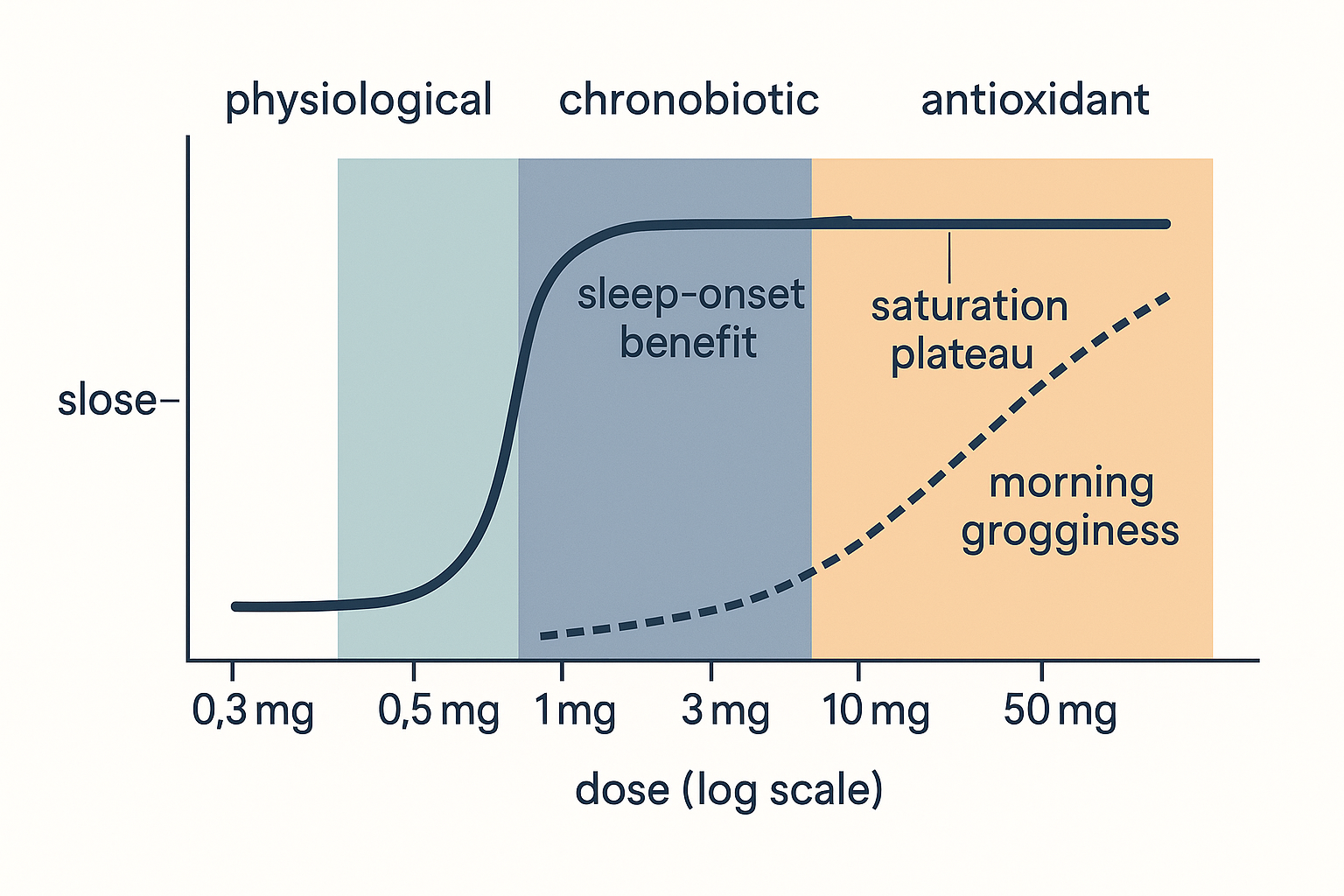 The melatonin dose-response is not a straight line: sleep-onset benefit plateaus once the low-affinity-saturating physiological dose (~0.3–0.5 mg) is reached, while the downsides — morning carry-over, possible receptor desensitisation, unwanted phase shifts — keep climbing, so the typical 3–10 mg over-the-counter dose buys overshoot rather than more sleep.
Tolerance, safety, and interactions — calibrated
- The "tolerance" myth. Melatonin is not addictive and does not produce the dependence or rebound insomnia of sedative-hypnotics (benzodiazepines, "z-drugs"). There is no withdrawal syndrome. The one genuine caveat is the receptor-desensitisation point above: chronically dosing far above physiological levels may blunt receptor responsiveness, which is an argument for the low dose, not for the megadose. Used at physiological doses, nightly melatonin does not show the classic tolerance escalation of true sedatives.
- Short-term safety is good; the real-world problem is the product, not the molecule. Melatonin has a wide safety margin and low acute toxicity. The most reliable adverse effects are next-day grogginess, vivid dreams, and a lower body temperature — mostly dose- and timing-dependent. The more serious practical issue is manufacturing quality: because melatonin is sold as an unregulated supplement in many countries, independent analyses have repeatedly found the actual melatonin content wildly different from the label (some products containing a small fraction, others several times the stated dose, and some contaminated with the neurotransmitter precursor serotonin). The dose problem above is compounded by not actually knowing the dose in the bottle.
- Populations to be cautious with. Because melatonin signals through receptors on many tissues and influences hormones and immune function, caution is warranted in pregnancy and breastfeeding (limited data), and there is a long-standing theoretical concern about routine use in children and adolescents given melatonin's interaction with the timing of puberty (the signal is read by the reproductive axis) — even though it is, paradoxically, widely used in paediatric sleep disorders under supervision. It can also lower blood pressure and glucose, relevant to people on medication for either.
- Drug interactions worth naming. The headline one runs through its metaboliser, CYP1A2: drugs that inhibit CYP1A2 — notably the antidepressant fluvoxamine, some quinolone antibiotics, and (mildly, but routinely) caffeine — slow melatonin's clearance and raise its blood levels substantially, so a "normal" dose behaves like a much larger one. Conversely smoking induces CYP1A2 and lowers melatonin levels. Melatonin may add to the effect of sedatives and alcohol, may interact with anticoagulants, and may blunt some effects of beta-blockers — which are themselves interesting here because beta-blockers, by blocking the β-adrenergic signal that drives the pineal at night (see the Pineal page), actually suppress the body's own melatonin production, a recognised cause of beta-blocker-associated insomnia and a rare instance where exogenous melatonin is replacing a hormone a drug has switched off.
The genuinely evidence-based uses
Stripping away the hype, melatonin has a few uses where the mechanism and the evidence line up well, all of which follow directly from the chronobiotic biology above:
- Jet lag — the best-supported use. Crossing time zones desynchronises your clock from local time; correctly-timed melatonin (evening at destination, to advance for eastward travel; with light management) helps re-entrain faster. Timing by the phase-response curve is the whole game.
- Shift work — to help consolidate daytime sleep and assist re-alignment, again timing-dependent and partial.
- Delayed sleep phase disorder (DSPD) — the "night owl" disorder where DLMO and sleep are pathologically late; low-dose melatonin taken several hours before the target (advanced) bedtime exploits the advance region of the PRC to pull the clock earlier. This is a chronobiotic use, not a sedative one, and the dose is small and the timing precise.
- Non-24-hour sleep-wake disorder in the totally blind — people with no light perception cannot entrain to the 24-hour day through the eye, so their clock free-runs; a daily melatonin dose can substitute as the entraining signal. (The MT1/MT2 agonist drug tasimelteon is licensed specifically for this.)
- Age-related insomnia in older adults — where the endogenous rhythm has genuinely flattened, prolonged-release melatonin (Circadin) replaces a faded signal; this is the population with the clearest "replacement" rationale.
For ordinary, occasional sleep-onset trouble in a healthy young adult, melatonin is a mild aid at best — a gentle timing nudge, not a sleeping pill — and the realistic expectation is a modest shortening of how long it takes to fall asleep, best achieved at a low dose. The synthetic melatonin-receptor agonist drugs — ramelteon and tasimelteon (both MT1/MT2 agonists) and agomelatine (an MT1/MT2 agonist that is also a 5-HT2C antagonist, used as an antidepressant) — are the pharmaceutical descendants of this biology, engineered for higher receptor selectivity and longer action than the raw molecule.
Putting it all together
- Melatonin is one small molecule with two completely different mechanisms. Chemically N-acetyl-5-methoxytryptamine, built from serotonin (synthesis covered on the Pineal page), it is amphiphilic — soluble in both fat and water — which lets it act both as a precise receptor signal and as a diffuse antioxidant that reaches every cell and organelle.
- As a hormone it works through two GPCRs, MT1 and MT2, both Gi-coupled (they lower cAMP, a quietening signal). MT1 turns the clock's volume down — suppressing SCN firing to lower the wake drive, the basis of sleep onset — and carries the "it is night" cue to peripheral tissues. MT2 turns the clock's hands — it is the main route for phase-shifting and tunes sleep architecture.
- Melatonin is the prototype chronobiotic. Its phase-response curve is the near-mirror of light's, offset ~12 hours: evening melatonin advances the clock, morning melatonin delays it. Timing is referenced to the DLMO (dim-light melatonin onset), the most stable marker of internal circadian time. Melatonin also lowers core temperature via distal vasodilation — a second, receptor-mediated push toward sleep.
- Its underrated job is mitochondrial antioxidant defence. With no receptor, melatonin directly scavenges the worst radicals (hydroxyl, peroxynitrite), does so as a cascade (its metabolites AFMK and AMK keep scavenging), concentrates inside mitochondria (which may make their own), and upregulates the cell's antioxidant enzymes. This may be its most ancient function.
- Output falls with age — a weaker clock signal and the loss of a nightly antioxidant sweep — for reasons (pinealocyte loss, fewer β-receptors, calcification) covered on the Pineal page.
- Exogenous melatonin is fast in, fast out (bioavailability ~3–33%, heavy first-pass via CYP1A2, half-life ~40–60 min). More is not better: the receptors saturate, so a physiological ~0.3–0.5 mg is as good or better than 3–10 mg for sleep onset, while megadoses add only overshoot, morning grogginess and possible desensitisation. For clock-shifting, timing on the PRC beats dose. It is not addictive, has a wide safety margin, but real-world products are notoriously mislabelled, and it interacts through CYP1A2 (caffeine, fluvoxamine raise it; beta-blockers suppress your own).
- The genuine, mechanism-backed uses are circadian: jet lag, shift work, delayed sleep phase disorder, non-24 in the blind, and age-related insomnia — all of which fall straight out of the chronobiotic biology.
The unifying idea: melatonin is the clock's signature written in chemistry. The pineal gland is the hardware that writes "it is night" into the blood; this page is what that message does once written — read as information by MT1 and MT2 to set the clock and open the sleep gate, and acting as chemistry in every mitochondrion to neutralise the damage of being alive. Understand the two channels and the supplement aisle stops being mysterious: the low dose is replacing a signal, the timing is moving a clock, and the megadose is mostly just overshoot.
Related Compounds & Deep Dives
The molecule and its pathway
- Melatonin — the compound page for the hormone described throughout here.
- L-tryptophan / Tryptophan — the dietary amino acid that is the raw material for the entire serotonin → melatonin pathway.
- P5P (vitamin B6) — active-B6 cofactor for the decarboxylation step that makes serotonin en route to melatonin.
Pineal-targeting peptides (restoring endogenous output)
- Pinealon & Epithalon deep dive — the Khavinson bioregulators; Epitalon's claim to restore the gland's own melatonin (rather than supply it from outside), with full evidence calibration.
- Epitalon — the pineal tetrapeptide pitched at melatonin restoration and telomerase activation.
- Pinealon — the pineal tripeptide pitched at neuroprotection and cognition.
Light, rhythm, and sleep support
- Circadian rhythm — the broader timing system melatonin serves as the output signal of.
- Sunlight / Light therapy / Red light therapy — bright daytime light is melatonin's opposite-signed clock signal; the two are complementary levers on the phase-response curve.
- Magnesium — calming mineral supporting sleep architecture (see the Magnesium deep dive).
- Glycine — promotes sleep partly by lowering core temperature through peripheral vasodilation, the same thermoregulatory route melatonin uses.
- Apigenin — a flavonoid sleep aid acting via a different (GABAergic) route, often paired with the melatonin pathway.
Related foundations
- The Pineal Gland — the upstream page: the gland, the light-gated wiring, and the melatonin synthesis pathway this page deliberately does not repeat.
- Cellular Energy — the electron transport chain and the mitochondrial ROS that melatonin's antioxidant role exists to neutralise.
- Hormones & the Endocrine System — the receptor logic (MT1/MT2 as surface, Gi-coupled receptors) and the free-vs-bound, production-vs-sensitivity framework melatonin obeys.
- Autonomic Nervous System — the sympathetic, β-adrenergic drive that makes the melatonin signal at night (and that beta-blockers suppress).
- Neuroscience of Cognition — the shared serotonin biochemistry and the place of the SCN in the wider brain.