Neurotoxicity & Neuroprotection
Why neurons die when they are pushed too hard — the excitotoxic cascade at the centre of it, the calcium overload that executes the cell, and the honest mechanistic case for which "neuroprotection" compounds actually defend a neuron versus which are hope dressed as pharmacology.
In 1969 the neuropathologist John Olney fed monosodium glutamate — ordinary dietary glutamate, the savoury amino acid — to newborn mice and found that it destroyed neurons in regions where the blood-brain barrier is leaky. Crucially, he showed that the toxic potency of a series of glutamate-like molecules tracked their excitatory potency: the better a compound was at stimulating neurons, the better it was at killing them. He coined the word excitotoxicity — death by over-excitation — and it remains the single most important concept on this page. Through the 1980s the cascade was filled in: the glutamate NMDA receptor was identified as the main gateway, and the lethal step was traced to calcium flooding into the cell. In 1983 a second thread arrived from an unexpected direction — a group of young drug users in California developed sudden, irreversible Parkinson's disease after injecting a botched batch of synthetic heroin. The neurologist J. William Langston traced it to a contaminant, MPTP, which selectively poisons dopamine neurons. For the first time there was a chemical that reproduced a human neurodegenerative disease on demand, and it became the workhorse model of dopaminergic toxicity.
Half a century on, the field is humbler than it was. Through the 1990s and 2000s, drug after drug that blocked the NMDA receptor completely — designed to halt excitotoxicity after a stroke — failed in human trials, either useless or unacceptably toxic (the antagonists selfotel, aptiganel/Cerestat and gavestinel are the famous wreckage). The lesson reshaped the whole approach: you cannot simply switch off the brain's main excitatory receptor, because the brain needs it to function. Modern neuroprotection — whether in stroke, traumatic brain injury, or the biohacker's stimulant-mitigation stack — is therefore about modulation, not blockade: dampening the pathological signal while sparing the physiological one. That distinction is the thread running through everything below.
Why this page exists
The biohacking world is full of "neuroprotective" compounds — memantine, NAC and NACET, mexidol, magnesium, methylene blue, cerebrolysin — and they are bought and stacked with great confidence. But "neuroprotection" is meaningless until you can answer one question: protection against what, exactly? A neuron can die in several distinct ways, and a compound that defends against one does nothing against another. This page builds the actual failure modes from first principles, so that when you read a claim like "I run heavy stimulants and mitigate the neurotoxicity with mexidol and ketamine," you can see precisely which step in which cascade each agent is supposed to touch — and judge whether the logic holds.
It is the dark twin of the Neuroscience of Cognition page, which built the dopamine system that stimulants exploit. Here we ask what happens when those same systems are driven past their limits. It leans heavily on three sibling pages — oxidative stress in the brain (the reactive-oxygen chemistry), glutamate and neuroplasticity (the NMDA receptor's normal job), and GABA and excitation/inhibition balance (the brake that opposes glutamate) — and on the inflammation page (the immune machinery that becomes neuroinflammation). I will reference rather than repeat them.
What neurotoxicity is — and why neurons are uniquely fragile
Neurotoxicity is damage to nervous-system tissue caused by a chemical or metabolic insult — functional impairment or outright death of neurons (and their support cells). The word covers a spectrum: at the mild end, reversible dysfunction (a neuron that signals poorly for a while and recovers); at the severe end, cell death, which in the adult brain is largely permanent.
That permanence is the first reason neurons are special. Most cells in your body are replaceable — skin, gut lining, and blood cells divide constantly. Mature neurons are post-mitotic: they have permanently exited the cell cycle and do not divide. A dead neuron in your cortex is, with very limited exceptions (the adult brain retains only small niches of new-neuron production), gone for good. There is no spare-parts replacement. So damage accumulates over a lifetime in a way it does not in regenerating tissues, and the stakes of any single toxic episode are higher.
The second reason is energy. Recall from the cellular energy page that the brain is roughly 2% of body weight but burns about 20% of the body's glucose and oxygen. The overwhelming majority of that energy goes to one task: running the ion pumps — chiefly the sodium-potassium ATPase (Na⁺/K⁺-ATPase) — that maintain the electrical gradients across the neuron's membrane. A neuron is, electrically, a charged battery held far from equilibrium, and holding it there costs ATP continuously. This makes neurons exquisitely dependent on an uninterrupted fuel and oxygen supply: cut it for even minutes (a stroke, a cardiac arrest) and the battery runs flat, the gradients collapse, and — as we will see — that collapse itself triggers the excitotoxic cascade.
The third reason is excitability. A neuron's whole purpose is to be triggerable — to fire in response to chemical signals by opening ion channels and letting charged ions rush across the membrane. The most important of these ions for our story is calcium (Ca²⁺), which is not merely a charge carrier but a powerful intracellular signal. Neurons keep their internal calcium concentration extraordinarily low — about ten-thousandfold lower than outside the cell — precisely so that a small, controlled influx can act as a sharp "something happened" message. This steep gradient is a loaded gun: it means any loss of control over calcium entry lets a flood pour in, and that flood is what kills.
The fourth reason is chemistry. The brain is rich in polyunsaturated fats (vulnerable to oxidation), packed with iron and other reactive metals, and runs its mitochondria flat out — so it generates reactive oxygen species (ROS), the corrosive oxygen by-products of metabolism, in abundance, while carrying comparatively modest antioxidant defences. The full redox story lives on the brain redox page; here we need only the headline: the brain operates close to its oxidative limit at the best of times.
Post-mitotic, energy-hungry, excitable, calcium-loaded, oxidatively stressed. Hold those five facts; every mechanism below is a consequence of one or more of them.
Excitotoxicity: the central mechanism
Excitotoxicity is the master cascade. Most forms of acute brain injury — stroke, trauma, hypoglycaemia, seizure — and a large part of chronic neurodegeneration ultimately kill neurons through it. To understand it, start with what the system does when it is working.
Glutamate is the brain's main excitatory neurotransmitter — the "go" signal, the chemical roughly 80% of brain synapses use to say fire. Its counterpart is GABA, the main inhibitory "stop" signal (see the GABA page); the balance between them, the excitation/inhibition (E/I) balance, is what keeps the brain stable. Glutamate's normal job — strengthening synapses to encode memory — runs through the NMDA receptor, covered on the neuroplasticity page. The single most important fact about the NMDA receptor is this: it is a calcium channel. When glutamate (with its co-agonist glycine) binds it and the cell is already somewhat depolarised, the receptor's pore opens and lets calcium into the neuron. In small, controlled bursts this calcium is the signal that says "strengthen this connection." That is learning. Excitotoxicity is what happens when that same channel is held open too long, too wide.
Here is the cascade, step by step:
-
Too much glutamate, for too long. Whether from massive release (a seizure, the wave of dying tissue after a stroke), from failed clearance (more on this below), or from a drug that drives glutamate signalling, the synapse is flooded with glutamate that does not get cleared on the normal millisecond timescale.
-
NMDA receptors are over-activated. Persistent glutamate holds the NMDA channels open. Calcium pours in down its enormous gradient — not the brief, sculpted pulse of normal signalling, but a sustained flood.
-
Intracellular calcium overloads. The neuron's calcium-buffering and pumping systems are overwhelmed. Internal calcium, normally held near zero, rises and stays high. This is the point of no return — the central lethal event. Everything before it is potentially recoverable; everything after it is the cell tearing itself apart, because calcium at high concentration is a master switch that turns on a battery of destructive enzymes simultaneously.
-
Calcium activates the executioners. Several calcium-triggered systems fire at once:
- Calpains — calcium-activated proteases (enzymes that chop up proteins). Unleashed, they degrade the neuron's structural skeleton (the cytoskeleton) and cleave other proteins into damaging fragments.
- Phospholipases, especially phospholipase A₂ (PLA₂) — enzymes that attack the cell's own membrane lipids. This both damages the membrane directly and liberates arachidonic acid, the raw material for inflammatory mediators (linking to the inflammation machinery) and a further source of ROS.
-
Neuronal nitric oxide synthase (nNOS) — an enzyme switched on by calcium that produces nitric oxide (NO), a gas signalling molecule. In excess, NO reacts with the superoxide radical (a ROS from the failing mitochondria) to form peroxynitrite, one of the most aggressive oxidants the body can make — it nitrates proteins, breaks DNA, and savages lipids. This is the crucial junction where excitotoxicity and oxidative stress become the same process.
-
Mitochondria take up the calcium — and break. Mitochondria, the cell's power plants, try to buffer the calcium flood by absorbing it. But excess matrix calcium, together with the rising ROS, triggers the mitochondrial permeability transition (MPT): a large pore opens in the inner mitochondrial membrane. When the MPT pore opens, the proton gradient that drives ATP synthesis (see cellular energy) collapses, the mitochondrion swells and ruptures, ATP production fails, and a burst of ROS plus apoptosis-triggering proteins (such as cytochrome c) is dumped into the cytoplasm.
-
The neuron dies — by necrosis or apoptosis. Which death it dies depends largely on how much ATP is left. If the energy collapse is total and abrupt, the cell cannot run any orderly programme and simply bursts — necrosis — spilling its glutamate and toxins onto its neighbours and spreading the excitotoxic wave outward (this is how a stroke's core damage propagates into the surrounding tissue, the so-called penumbra). If some ATP remains, the cell may instead run the controlled self-destruct programme of apoptosis. Either way, the neuron is lost.
flowchart TD
GLU["Excess glutamate<br/>in synapse (too long)"] --> NMDA["NMDA receptors<br/>over-activated"]
NMDA --> CA["Ca2+ floods in<br/>-> intracellular overload<br/>(POINT OF NO RETURN)"]
CA --> CALP["Calpains<br/>(chop cytoskeleton)"]
CA --> PLA["Phospholipase A2<br/>(digest membrane)"]
CA --> NNOS["nNOS -> nitric oxide"]
CA --> MITO["Mitochondrial<br/>Ca2+ uptake"]
NNOS --> PEROX["NO + superoxide<br/>-> peroxynitrite (ROS)"]
MITO --> MPT["Permeability transition<br/>pore opens"]
PEROX --> MPT
MPT --> ATP["ATP collapse + ROS burst<br/>+ cytochrome c release"]
CALP --> DEATH["Neuron death:<br/>necrosis or apoptosis"]
PLA --> DEATH
ATP --> DEATH
DEATH -.->|"necrotic cell spills<br/>glutamate"| GLU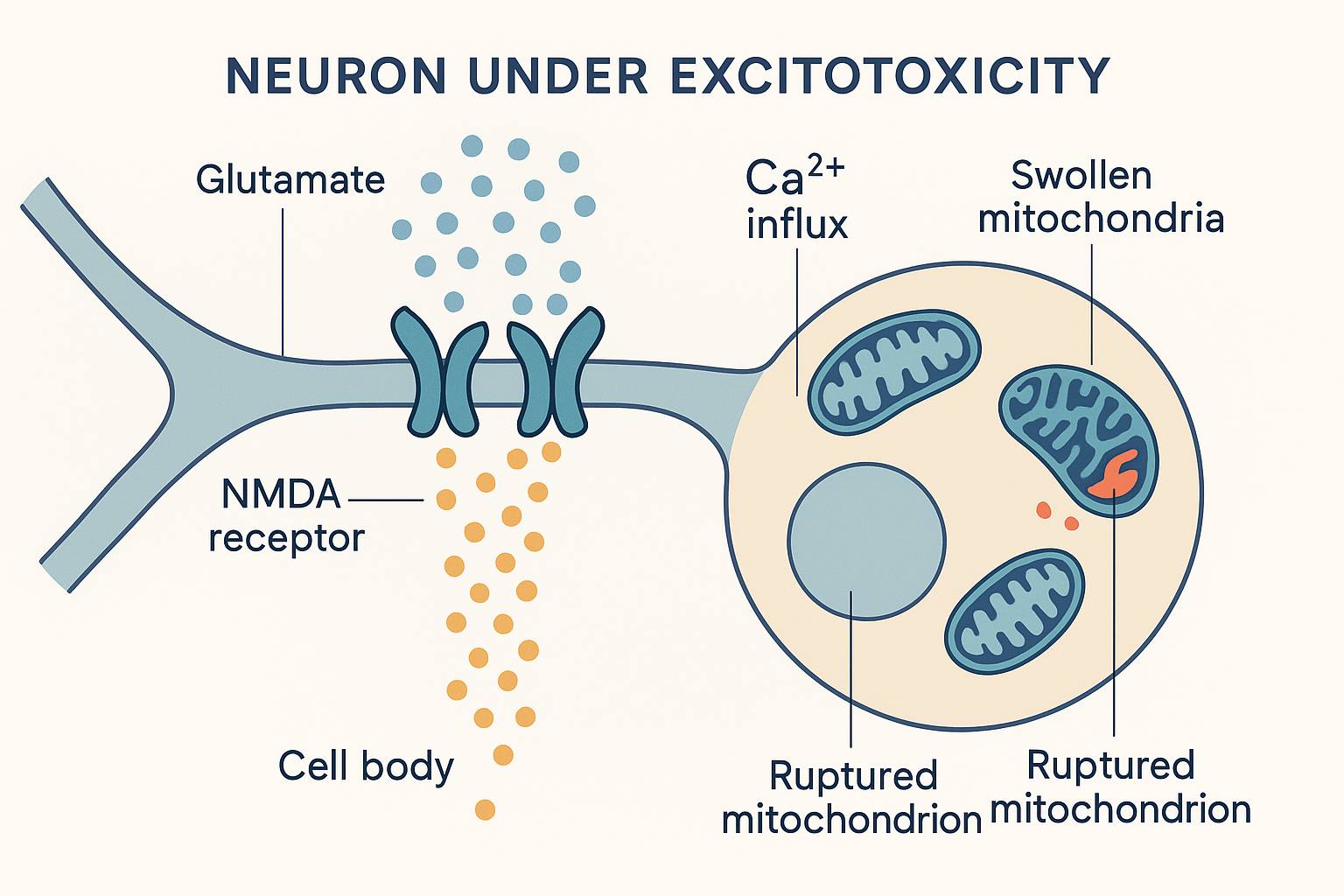 Excitotoxicity in one cell: sustained glutamate holds the NMDA calcium channels open, intracellular calcium overloads, and the calcium-loaded mitochondria swell, lose their membrane potential, and rupture — the structural event behind the cascade above.
A refinement that matters for the drugs later: synaptic versus extrasynaptic NMDA receptors. NMDA receptors sitting inside the synapse, activated by normal brief signalling, carry pro-survival signals — they switch on protective and growth genes. NMDA receptors sitting outside the synapse (extrasynaptic), activated only when glutamate spills over and lingers (exactly the excitotoxic condition), carry pro-death signals — they shut down survival genes and drive the cascade above. This is why the goal of a good neuroprotective drug is not to block all NMDA receptors (that kills the protective synaptic signalling too — the reason the blanket antagonists failed in stroke trials) but to preferentially block the extrasynaptic, pathologically over-activated ones. Memantine's whole reason for existing, as we will see, is that it does roughly this.
Energy failure: why ischaemia and hypoglycaemia trigger excitotoxicity
Excitotoxicity does not require a flood of released glutamate. It can be triggered by an energy failure alone — and understanding why closes one of the most important loops in neuroscience, explaining why strokes, cardiac arrest, severe low blood sugar, and mitochondrial poisons all kill neurons through the same final pathway.
The link is glutamate clearance. Glutamate released into a synapse is normally vacuumed back up within milliseconds, mostly by astrocytes — the brain's support cells — using transporter proteins called excitatory amino acid transporters (EAATs). But these transporters do not pump glutamate uphill for free; they run on the sodium gradient across the cell membrane, the same gradient maintained by the ATP-burning Na⁺/K⁺-ATPase. The clearance of glutamate is therefore indirectly powered by ATP.
Now starve the brain of energy — block its blood supply (ischaemia, i.e. stroke), its oxygen (hypoxia), its glucose (hypoglycaemia), or poison its mitochondria. ATP production falls. The Na⁺/K⁺-ATPase slows. The sodium gradient runs down. And the glutamate transporters, which depend on that gradient, not only stop clearing glutamate — they can run in reverse, pumping glutamate out into the synapse. Meanwhile the neuron, with its pumps failing, depolarises (its membrane charge collapses), which by itself relieves the magnesium block on the NMDA receptor (described below) and lets the channel open. So energy failure produces, simultaneously: rising synaptic glutamate, NMDA receptors primed to open, and a cell that can no longer pump out the calcium that results. Excitotoxicity ignites.
Worse, it is a vicious circle. The calcium overload damages mitochondria, which lowers ATP further, which worsens the pump failure, which raises glutamate and calcium further. This self-amplifying loop is why a brief interruption of blood flow can cause damage that keeps expanding for hours afterwards, and why the practical target of stroke and trauma medicine is to break the loop quickly.
flowchart LR
    FAIL["Energy failure<br/>(ischaemia, hypoglycaemia,<br/>mito poison)"] --> ATP["ATP falls"]
    ATP --> PUMP["Na/K-ATPase slows<br/>-> Na gradient runs down"]
    PUMP --> EAAT["Glutamate transporters<br/>stall / reverse"]
    PUMP --> DEPOL["Membrane depolarises<br/>-> Mg2+ block relieved"]
    EAAT --> GLU["Synaptic glutamate rises"]
    DEPOL --> NMDA["NMDA receptors open"]
    GLU --> NMDA
    NMDA --> CA["Ca2+ overload"]
    CA --> MITODMG["Mitochondrial damage"]
    MITODMG --> ATP
This is also the deep reason metabolic health protects the brain: anything that keeps mitochondria efficient and ATP plentiful raises the threshold at which this loop can start. It is the mechanistic basis for the interest in methylene blue (an electron-transport-chain support agent) and creatine (an ATP buffer, from the cognition page) as neuroprotectants — they fortify exactly the energy supply whose failure starts the cascade.
Oxidative and mitochondrial neurotoxicity
The excitotoxic cascade already generated reactive oxygen species at three points (peroxynitrite from nNOS, the ROS burst from the permeability transition, and arachidonic-acid metabolism). But oxidative damage is also a neurotoxic mechanism in its own right, and it is the brain's chronic vulnerability — the full treatment is on the brain redox page, so here is the load-bearing summary.
Reactive oxygen species are unstable, electron-hungry oxygen derivatives — superoxide, hydrogen peroxide, the hydroxyl radical — produced unavoidably as mitochondria pass electrons down the respiratory chain. In moderation they are signalling molecules and are mopped up by the cell's antioxidant systems. In excess they oxidise and damage everything they touch: they peroxidise membrane lipids (the brain's polyunsaturated fats are especially susceptible, generating toxic aldehydes such as 4-HNE), oxidise proteins (including the ion pumps and the glutamate transporters, worsening clearance), and damage DNA. The brain's high metabolic rate, high lipid content, and abundant iron (which catalyses radical formation) make it the body's most oxidatively exposed organ, while its antioxidant defences are comparatively modest.
The pivotal molecule on the defence side is glutathione (GSH) — the cell's main intracellular antioxidant, a small peptide that neutralises peroxides and regenerates other antioxidants. Neurons are relatively poor at making their own glutathione and depend partly on astrocytes to supply the building blocks; the rate-limiting raw material is cysteine, a sulphur-containing amino acid. This single fact is why NAC (N-acetylcysteine) and its more brain-penetrant ester NACET are everywhere in neuroprotection stacks: they are cysteine delivery vehicles, supplying the limiting ingredient for glutathione synthesis. Whether they raise brain glutathione enough to matter is the real question, addressed in the calibration section.
The mitochondrial angle deserves emphasis because it is a feedback trap. Mitochondria are both the main source of ROS and a main target of it. Oxidative damage to mitochondrial proteins and DNA degrades the respiratory chain, which makes it leak more electrons and produce more ROS, which damages the mitochondria further — a downward spiral that lowers ATP output and, via the energy-failure loop above, lowers the excitotoxic threshold. This is why "mitochondrial dysfunction" recurs as a theme across essentially every neurodegenerative disease, and why agents that either scavenge ROS or shore up electron transport — mexidol (an antioxidant that also supports mitochondrial respiration) and methylene blue (which can carry electrons within the chain and reduce leak) — are pursued as neuroprotectants.
Neuroinflammation: when the brain's immune cells turn on it
The brain has its own resident immune cells, the microglia — small, mobile cells that constantly survey the tissue. In their resting state they are housekeepers: they prune unused synapses, clear debris, and provide trophic support. But when they detect damage signals — molecules spilled from dying neurons, bacterial products like LPS (lipopolysaccharide) crossing a compromised blood-brain barrier (see the gut-brain axis and inflammation pages), or simply a high-ROS, high-glutamate environment — they switch to an activated state.
Activated microglia are a double-edged defence. They clear dead cells and pathogens, which is necessary. But they also release a barrage of pro-inflammatory cytokines (signalling proteins such as TNF-α and IL-1β), more ROS and nitric oxide, and, critically, glutamate itself. So microglial activation feeds directly back into the excitotoxic and oxidative cascades — inflammation raises the glutamate and ROS load, which damages neurons, which spills more damage signals, which activates more microglia. This is neuroinflammation: a self-sustaining loop in which the brain's immune response becomes a driver of ongoing injury rather than a route to repair.
Two consequences matter for this page. First, neuroinflammation is the bridge by which systemic problems become neurotoxic ones: a leaky gut, chronic systemic inflammation, or metabolic disease can raise the brain's baseline microglial activation and thereby lower its tolerance for any additional insult. Second, it ties the kynurenine pathway in: under inflammation, the amino acid tryptophan is diverted (by the enzyme IDO) toward quinolinic acid, an NMDA-receptor agonist that is itself excitotoxic (detailed on the gut-brain axis page). Inflammation thus does not merely accompany excitotoxicity — it manufactures an excitotoxin.
Stimulant and dopaminergic neurotoxicity
Now to the case that motivates this page: the neurotoxicity of amphetamines — including prescription Adderall (mixed amphetamine salts) and the far more potent Desoxyn (pharmaceutical methamphetamine) — and the question of how worried to be. This requires care, because the topic is wrapped in both fearmongering and denial. The honest position is that there is a real, mechanistically well-characterised dopaminergic neurotoxicity at high exposures, and that it is genuinely different from, though continuous with, the effects of therapeutic doses.
Recall the dopamine terminal from the cognition page: a presynaptic neuron stores dopamine in vesicles and releases it into the synapse, where the dopamine transporter (DAT) normally clears it back up. Amphetamine, you will remember, does three things — blocks reuptake, reverses the DAT to force dopamine efflux, and inhibits the breakdown enzyme MAO. The result is a massive rise in synaptic and cytoplasmic dopamine. That mechanism, which produces the desired stimulant effect, is also the root of the toxicity, through several converging routes:
-
Dopamine autoxidation. Dopamine is a chemically reactive molecule. Kept safely packaged inside vesicles it is stable, but when amphetamine drives it out of the vesicles and into the cytoplasm in bulk, the excess dopamine spontaneously oxidises — it reacts with oxygen to form dopamine quinones and, as a by-product, reactive oxygen species (superoxide and hydrogen peroxide). The quinones themselves are reactive and bind to and damage proteins. So the very act of flooding the cytoplasm with dopamine generates an oxidative insult, inside the dopamine neuron specifically. This is a large part of why dopaminergic terminals are the selective casualties.
-
Hyperthermia. Amphetamines, especially methamphetamine, raise body temperature — both through their peripheral sympathetic action and central effects. Heat accelerates every step of the damage: it speeds dopamine oxidation, increases glutamate release, worsens mitochondrial dysfunction, and raises metabolic demand. Much of the most severe methamphetamine neurotoxicity in animal models can be prevented simply by keeping the animal cool — which tells you how central temperature is. This is also why the recreational danger is so dose-, setting-, and overheating-dependent.
-
Glutamate and excitotoxicity. High-dose amphetamines increase glutamate release in the striatum, recruiting the NMDA-receptor excitotoxic cascade described above on top of the dopamine-specific oxidative damage. The two mechanisms reinforce each other.
-
Mitochondrial impairment and energy stress. Methamphetamine impairs mitochondrial function and, combined with the enormous metabolic demand of sustained stimulation, pushes neurons toward the energy-failure loop. Amphetamine-type stimulants are mitochondrial stressors.
The classic comparison is MPTP, the contaminant from the 1983 Parkinson's cases. MPTP is interesting because it is a clean model of one mechanism. After crossing into the brain, MPTP is converted by glial cells into MPP⁺, which is then taken up selectively by the dopamine transporter — so it concentrates inside dopamine neurons, exactly like dopamine itself. Once inside, MPP⁺ poisons Complex I of the mitochondrial electron-transport chain, collapsing ATP production and generating ROS. The result is selective, rapid death of the nigrostriatal dopamine neurons and an instant, permanent Parkinson's syndrome. MPTP shows in pure form what amphetamine toxicity does in messier combination: a dopamine-neuron-selective insult driven by mitochondrial energy failure and oxidative stress, gated by the DAT's selectivity.
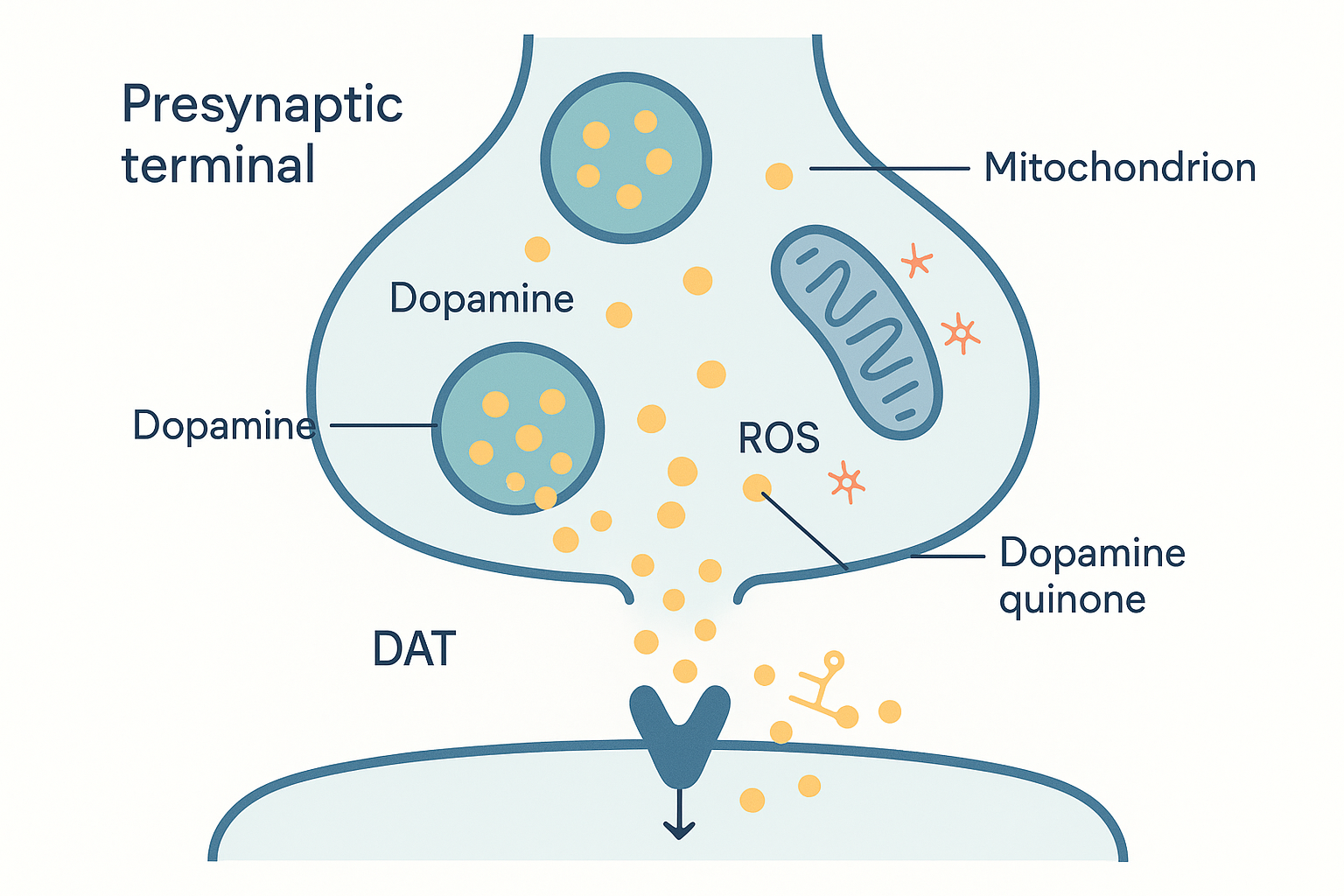 Stimulant neurotoxicity is dopamine-neuron-selective: amphetamine drives dopamine out of its protective vesicles into the cytoplasm, where it autoxidises into reactive quinones and reactive oxygen species — an oxidative insult generated inside the very cells that handle dopamine.
The honest calibration. None of this means a person taking a therapeutic dose of prescription amphetamine for ADHD is destroying their brain. The distinction is real and rests on dose, route, duration, and temperature:
- Therapeutic oral dosing (clinical ADHD treatment) produces dopamine elevations far below the threshold where the autoxidation-and-hyperthermia toxicity becomes prominent, is not associated with the gross dopaminergic loss seen with high-dose abuse, and on balance the long-term human evidence does not show neurodegeneration at clinical doses. The risk floor is low.
- High-dose, repeated, or non-oral methamphetamine use — the territory of "running Adderall, Desoxyn and God knows what else" — is a genuinely different exposure. Human imaging of chronic methamphetamine users shows reduced dopamine-transporter density and markers consistent with dopaminergic injury, some of which only partially recovers with abstinence. Here the toxicity is real and the concern is warranted.
- The danger scales steeply and non-linearly with dose, frequency, sleep deprivation, dehydration, and especially overheating — which is why the same drug sits at opposite ends of the risk spectrum depending on how it is used.
The reasonable reading is neither "stimulants rot your brain" nor "it's all fine" but: there is a continuous dose-dependent dopaminergic-toxicity gradient, therapeutic use sits at the safe end of it, heavy use sits at the dangerous end, and the mechanisms (oxidation, heat, glutamate, mitochondrial stress) tell you exactly which levers raise or lower the risk.
The brain's endogenous defences
Before reaching for compounds, it is worth seeing that the brain already runs a sophisticated, multi-layer defence against exactly these failure modes. Every neuroprotective drug is, in effect, an attempt to reinforce one of these native systems — so knowing them is the map to the pharmacology.
The glutamate–glutamine cycle (astrocyte clearance). The first and most important line of defence is keeping synaptic glutamate brief. As described above, astrocytes rapidly remove glutamate from the synapse via the EAAT transporters. They then do something elegant: they convert the glutamate into glutamine — an inert, non-excitotoxic molecule — using the enzyme glutamine synthetase, and ship it back to the neuron, which reconverts it to glutamate for reuse. This glutamate–glutamine cycle both terminates the signal and recycles the transmitter, and it is the single most important guard against excitotoxicity. Anything that protects astrocyte function or transporter capacity is, fundamentally, neuroprotective. (Note: this is also why energy failure is so catastrophic — it disables exactly this transporter-based defence.)
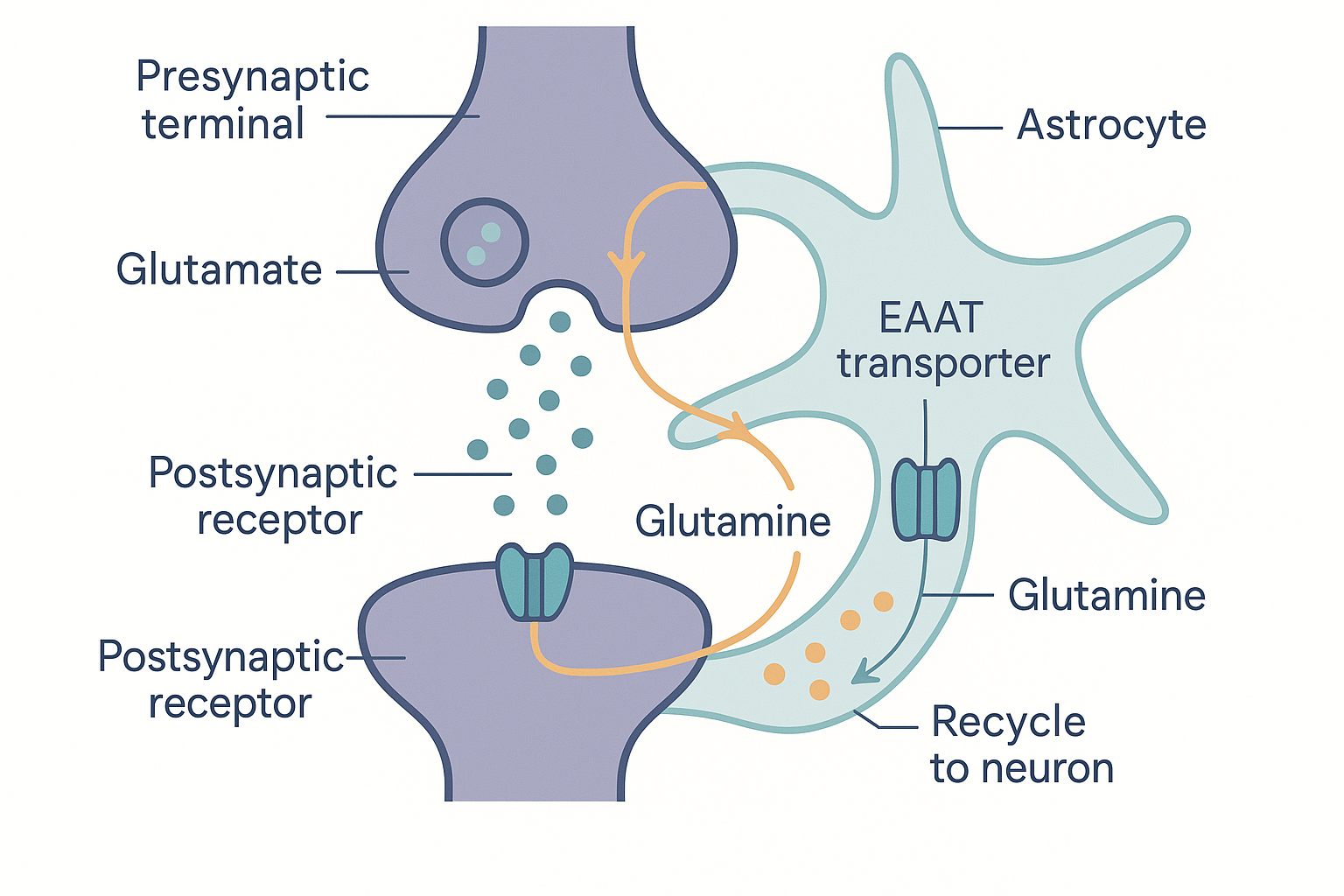 The brain's primary defence against excitotoxicity: astrocytes vacuum glutamate out of the synapse within milliseconds via EAAT transporters and convert it to harmless glutamine, recycling it back to the neuron. This sodium-gradient-powered cycle is what energy failure disables.
The magnesium block on the NMDA receptor. The NMDA receptor has a built-in safety catch: at the cell's normal resting voltage, a magnesium ion (Mg²⁺) physically sits in the channel's mouth, plugging it. Glutamate binding alone is not enough to open the channel — the cell must also be depolarised to electrostatically push the magnesium out. This voltage-dependent Mg²⁺ block is the mechanism that makes the NMDA receptor a "coincidence detector" for learning (covered on the neuroplasticity page), but it is also a tonic brake on excitotoxicity: it means the calcium channel stays shut during ordinary low-level glutamate signalling and only opens for strong, coincident activity. Adequate brain magnesium keeps this brake firm; magnesium depletion loosens it, lowering the excitotoxic threshold. This is the direct mechanistic basis for magnesium's place in neuroprotection — and for the tweet's call for "absolute magnesium megadoses."
The antioxidant systems. Layered defences neutralise ROS: superoxide dismutase (SOD) converts superoxide to hydrogen peroxide; catalase and glutathione peroxidase convert that to water; glutathione itself neutralises peroxides directly and is regenerated continuously. Vitamin E guards the membrane lipids; vitamin C and others recycle the system. The capacity of this network sets how much oxidative insult a neuron can absorb before damage accrues — and it is the system that NAC/NACET, mexidol, and methylene blue aim to reinforce.
Neurotrophic support. Neurons depend on a continuous supply of neurotrophic factors — survival-and-growth proteins such as BDNF (brain-derived neurotrophic factor) and GDNF (glial-derived neurotrophic factor, particularly important for dopamine neurons). These activate pro-survival gene programmes (the same ones the synaptic NMDA receptors switch on), strengthen mitochondria, and raise the cell's resistance to insult. Trophic support is the regenerative and resilience arm of defence, and it is what cerebrolysin (a mixture of neuropeptides and amino acids intended to mimic trophic-factor signalling) is reaching for.
Adenosine — the endogenous emergency brake. Recall adenosine from the cognition page as the "you're getting tired" signal that caffeine blocks. It has a second, deeper role: it is a native neuroprotectant. Adenosine accumulates sharply whenever ATP is consumed faster than it is made — exactly the energy-stress condition that precedes excitotoxicity. By acting on its inhibitory A1 receptors, adenosine suppresses glutamate release and dampens neuronal firing, directly opposing the excitotoxic cascade. It is the brain's built-in feedback that says "energy is running low — quieten down before damage occurs." This is one reason chronic heavy caffeine use during states of metabolic stress is not entirely benign: blocking adenosine also blocks this protective brake.
Neuroprotection strategies — and the compounds
With the cascades and the native defences in hand, the logic of neuroprotection becomes a simple map: every strategy reinforces one of the defences or interrupts one of the cascade's steps. There are four broad points of intervention.
flowchart TD
    subgraph CASCADE["The damage pathway"]
      G[Excess glutamate] --> N[NMDA over-activation]
      N --> C[Ca2+ overload]
      C --> O[ROS / oxidative damage]
      C --> M[Mitochondrial failure / ATP loss]
      O --> D[Cell death]
      M --> D
    end
    I1["1. Reduce glutamate drive<br/>/ support clearance"] -.-> G
    I2["2. Modulate NMDA receptor<br/>memantine, magnesium, agmatine"] -.-> N
    I3["3. Quench ROS / support mito<br/>NAC, NACET, mexidol, methylene blue, taurine"] -.-> O
    I3 -.-> M
    I4["4. Trophic + recovery support<br/>cerebrolysin; cooling"] -.-> D
1. Modulating the NMDA receptor (without blocking it off). This is the lesson of the failed stroke trials made into a drug strategy.
-
Memantine is the cleanest example of "modulation, not blockade." It is an uncompetitive, low-affinity, open-channel blocker with fast off-kinetics and voltage-dependence — a precise set of properties that together mean it behaves, deliberately, much like a stickier version of the natural magnesium block. It enters the NMDA channel only when the channel is open, and because its affinity is moderate and it leaves quickly, it preferentially sits in channels that are excessively, persistently open — the extrasynaptic, pathologically over-activated receptors of the excitotoxic state — while being knocked out of channels during the brief, strong openings of normal synaptic signalling. The net effect is that it dampens the pathological calcium leak while largely sparing physiological transmission. This is why memantine is tolerated and clinically useful (in Alzheimer's) where the full-blockade antagonists were not. Its affinity for the channel is roughly a thousandfold higher than magnesium's, which is why it provides a firmer brake than dietary magnesium alone.
-
Magnesium is the endogenous version of the same idea — it is the natural channel block. Keeping brain magnesium replete keeps the tonic brake firm. The catch, covered in the magnesium deep dive, is that raising brain magnesium is hard (ordinary forms barely move it), which is the rationale for the threonate form. The tweet's "1 g elemental magnesium" across multiple forms is aimed squarely at this defence — mechanistically sound in direction, though brain-delivery is the real bottleneck, not total dose.
-
Agmatine (a metabolite of the amino acid arginine) is a milder NMDA-receptor modulator and also inhibits the nNOS step (reducing the nitric-oxide/peroxynitrite arm of the cascade) — a plausible secondary lever, on weaker evidence.
-
S-ketamine / ketamine is itself an NMDA-receptor antagonist (and the basis of its rapid antidepressant and dissociative effects). At sub-anaesthetic doses it can blunt glutamatergic over-activation, which is the theoretical basis for its inclusion in a stimulant-mitigation stack. The honest caveat is large: ketamine is a non-selective channel blocker (closer to the blanket antagonists than to memantine), it has its own neurotoxicity signal at high or repeated exposure (the Olney's-lesions findings in animals, and bladder and cognitive harms in heavy human users), and using one psychoactive drug to "protect" against another is a strategy with a thin evidence base. It is the most speculative element of the tweet's stack.
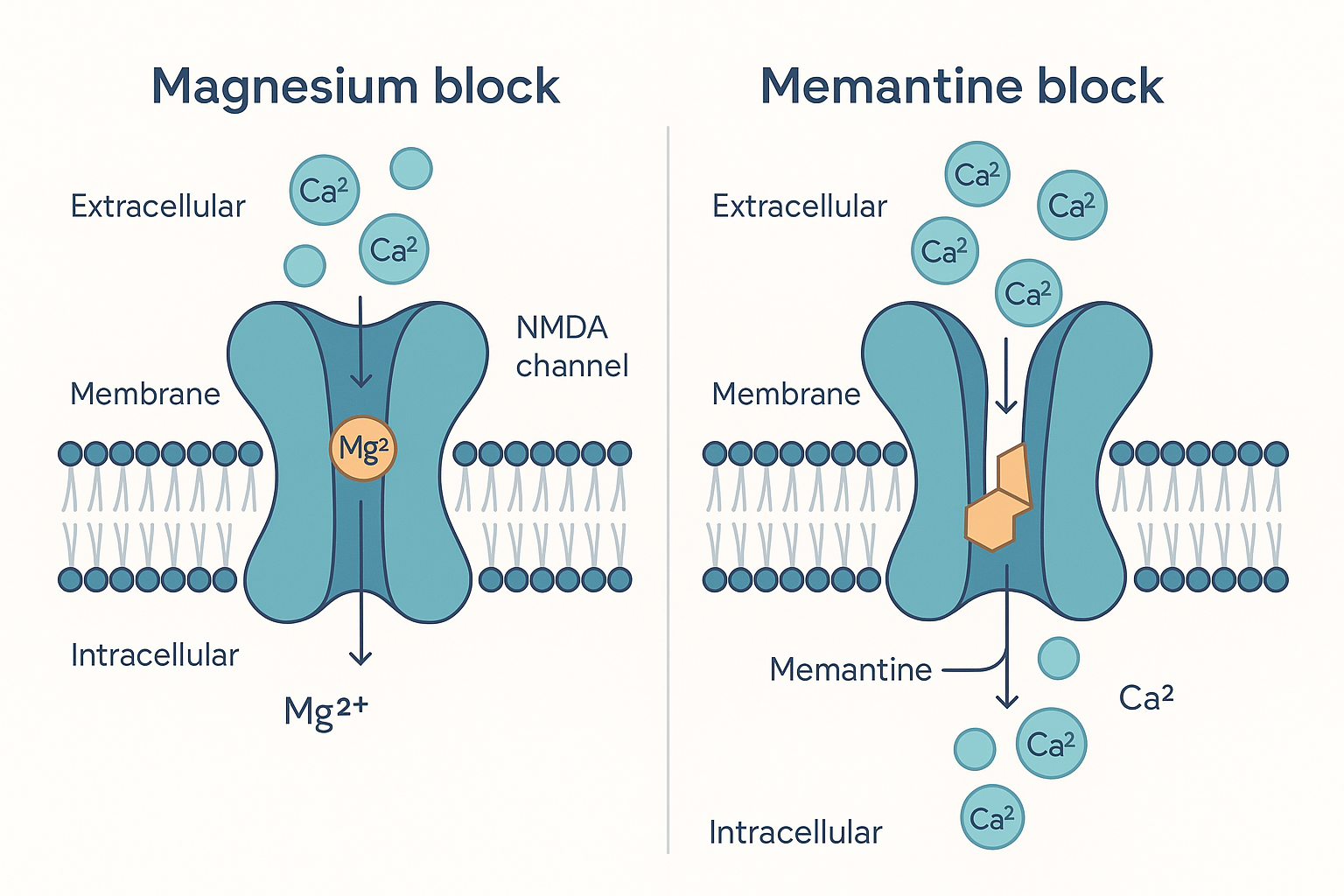 Neuroprotection at the receptor: the NMDA channel carries a natural magnesium plug (left) that the membrane voltage controls. Memantine (right) is an open-channel blocker with magnesium-like behaviour but a firmer, longer grip — it preferentially plugs channels stuck pathologically open, dampening the toxic calcium leak while sparing normal signalling.
2. Antioxidant and mitochondrial support. This arm targets the ROS-and-energy steps that execute the cascade.
- NAC and NACET supply cysteine, the rate-limiting raw material for glutathione, the brain's main antioxidant. NACET (the ethyl ester) is more lipophilic and is claimed to cross membranes and the blood-brain barrier better than NAC, which is why the tweet calls it "superior… for neuroprotection." The mechanism is sound; the open question (below) is the magnitude of brain-glutathione elevation actually achieved.
- Mexidol (emoxypine succinate) is a synthetic antioxidant widely used in the post-Soviet clinical world. It scavenges ROS and stabilises membranes, and its succinate moiety can feed the mitochondrial electron-transport chain directly, supporting ATP production under stress — so it plausibly hits both the oxidative and the energy-failure arms. The Western evidence base is thin, but the proposed mechanism aligns well with the cascade.
- Methylene blue is unusual: at low doses it can act as an alternative electron carrier within the mitochondrial chain, accepting electrons and reducing the electron leak that produces superoxide — shoring up ATP output while lowering ROS. This dual action (more energy, less oxidative leak) is exactly what the energy-failure-and-oxidative core of neurotoxicity calls for, and it has the best mechanistic story of the metabolic protectants — though it is biphasic (pro-oxidant at higher doses) and the clinical neuroprotection evidence remains preliminary.
- Taurine is a calcium-handling modulator and osmolyte with antioxidant and membrane-stabilising properties; it can buffer intracellular calcium and dampen excitotoxic signalling — a gentle, plausible adjunct.
3. Reducing the glutamate drive and supporting clearance. Less glamorous but upstream of everything: anything that lowers the excitatory load or supports astrocyte clearance reduces the input to the cascade. This is where adequate sleep, controlled inflammation (see inflammation), and a healthy E/I balance (GABA page) do quiet, foundational work — and it is the rationale for keeping GABAergic tone and metabolic health intact rather than relying solely on downstream rescue.
4. Trophic support and recovery.
- Cerebrolysin is a porcine-brain-derived mixture of low-molecular-weight neuropeptides and amino acids intended to act like a cocktail of neurotrophic factors — switching on the survival-and-growth programmes, supporting mitochondria, and aiding recovery after injury. It has a real (if mixed) clinical literature in stroke, TBI, and dementia. Mechanistically it targets the resilience and repair arm rather than blocking the acute cascade, which makes it complementary to the antioxidant and NMDA agents rather than redundant with them.
5. Thermoregulation. Underrated and, for the stimulant case, possibly the highest-leverage intervention of all: because hyperthermia dramatically amplifies amphetamine neurotoxicity, simply not overheating — staying hydrated, cool, and rested, avoiding stacking stimulants with hot environments or sustained exertion — removes one of the largest multipliers of dopaminergic damage. No compound required.
The biohacker "neuroprotection stack" — an honest reckoning
The tweet that prompted this page captures the contemporary biohacker logic exactly. The author admires a nootropic stack (meldonium, mexidol, cerebrolysin, noopept, alpha-GPC, memantine) but is sceptical of a specific pattern:
"no clue why someone would run stimulants like Adderall, Desoxyn and God knows what else, and expect all the neurotoxicity to be mitigated with Mexidol, S-Ketamine and Cerebrolysin, more neuroprotection is needed."
He proposes adding HDAC inhibitors for tolerance reversal, NACET ("superior version of NAC… neuroprotection"), bromantane plus tyrosine to "replenish dopamine stores," and "absolute magnesium megadoses." Mapping this against the mechanisms above lets us grade it honestly:
Mechanistically well-aligned (defends a real step):
- Magnesium — directly reinforces the endogenous NMDA Mg²⁺ block, the cascade's first brake. Sound in principle; brain delivery (form), not gross dose, is the real constraint.
- Memantine — the single most rational element: an NMDA modulator purpose-built to dampen pathological over-activation while sparing normal signalling. If anything in the stack defends against excitotoxicity, this does.
- NAC / NACET — supplies the rate-limiting substrate for glutathione, the brain's main antioxidant, targeting the oxidative arm that is especially relevant to dopamine-driven autoxidation. NACET's better brain penetration is a real pharmacological argument. Mechanism sound; magnitude of effect uncertain.
- Mexidol and methylene blue — hit the oxidative-plus-mitochondrial core, which is exactly where dopaminergic and energy-failure toxicity converge. Reasonable direction; thin clinical evidence.
- Cerebrolysin — targets the trophic/recovery arm, complementary rather than redundant. Plausible, mixed evidence.
Plausible but weaker / more speculative:
- S-ketamine — a non-selective NMDA antagonist closer to the failed blanket antagonists than to memantine, with its own neurotoxicity and dependence signals. Using one neuroactive drug to offset another is a thin strategy; this is the stack's most questionable load-bearing element, and the author's own scepticism here is well-placed.
- Bromantane + tyrosine — these support dopamine synthesis and supply (see cognition), which addresses depletion (running the tank dry), a real consequence of heavy stimulant use — but replenishing dopamine is not the same as preventing the oxidative damage that flooding cytoplasmic dopamine causes. It treats the deficit, not the toxicity. Worth distinguishing clearly.
- HDAC inhibitors / "tolerance reversal," GDNF-boosting, peptides (cortexin, pinealon) — these address tolerance and cognition, not the death cascades, and rest on much weaker evidence; they are adjacent to neuroprotection rather than central to it.
The honest bottom line. The author's instinct — that mexidol-plus-ketamine-plus-cerebrolysin is not enough to offset heavy stimulant neurotoxicity, and "more neuroprotection is needed" — is mechanistically defensible: those three agents do not cleanly cover the full cascade, and several elements people reach for (dopamine precursors, peptides) address adjacent problems rather than the core damage. But the deeper truth the framing misses is that no antioxidant stack neutralises an arbitrary toxic exposure. The dose-response of damage is steep, hyperthermia is a larger multiplier than any pill is a divisor, and the cleanest "neuroprotection" for stimulant toxicity is less stimulant, taken cooler, with more sleep. The stack is best understood as risk reduction at the margins — genuinely reinforcing specific defences (magnesium, memantine, glutathione precursors, mitochondrial support) — not as a licence to push exposure arbitrarily high on the assumption that the damage is fully "mitigated." Mechanistically literate harm-reduction, yes; a force field, no.
Putting it all together
- Neurons are uniquely vulnerable because they are post-mitotic (irreplaceable), energy-hungry (dependent on uninterrupted ATP to hold their ion gradients), excitable (loaded with a steep calcium gradient that is a loaded gun), and oxidatively exposed.
- Excitotoxicity is the master cascade: excess glutamate → NMDA-receptor over-activation → calcium overload (the point of no return) → calpains, phospholipases, and nNOS fire together → mitochondrial calcium uptake → permeability transition → ATP collapse and a ROS burst → necrosis or apoptosis. The key refinement: extrasynaptic over-activation is the lethal one; synaptic signalling is protective — which is why blanket NMDA blockade failed and selective modulation is the goal.
- Energy failure triggers excitotoxicity by itself: ATP loss stalls (or reverses) the sodium-powered glutamate transporters and relieves the magnesium block, so ischaemia, hypoglycaemia, and mitochondrial poisons ignite the same cascade — in a self-amplifying loop.
- Oxidative and mitochondrial damage is the brain's chronic vulnerability and the feedback trap at the cascade's heart; glutathione (limited by cysteine) is the central defence.
- Neuroinflammation (activated microglia releasing cytokines, ROS, and glutamate) is a self-sustaining loop that lowers the threshold for every other insult and even manufactures an excitotoxin (quinolinic acid).
- Stimulant/dopaminergic toxicity is dopamine-neuron-selective, driven by cytoplasmic dopamine autoxidation (ROS and quinones), hyperthermia, added glutamate, and mitochondrial stress — MPTP being the clean model. It is a steep dose-dependent gradient: therapeutic dosing sits at the safe end, heavy/hot/sleep-deprived use at the dangerous end.
- The brain already defends itself — astrocyte glutamate clearance and the glutamate–glutamine cycle, the magnesium NMDA block, the glutathione/SOD antioxidant network, neurotrophic support, and adenosine as an endogenous emergency brake — and every neuroprotective compound is an attempt to reinforce one of these.
- The compound strategies map cleanly onto the cascade: modulate NMDA without blocking it (memantine, magnesium, agmatine); quench ROS and support mitochondria (NAC/NACET, mexidol, methylene blue, taurine); provide trophic/recovery support (cerebrolysin); and, for stimulants specifically, don't overheat.
- The honest calibration: mechanistically literate neuroprotection genuinely reduces risk at the margins, but no stack neutralises an arbitrary toxic dose — for stimulant toxicity the largest levers are dose, temperature, and sleep, not pills.
The unifying idea: a neuron dies when calcium and energy lose control of each other — calcium floods in faster than ATP-powered pumps can remove it, the mitochondria that should provide that ATP are themselves overwhelmed and turned into ROS factories, and the cell tears itself apart. Excitotoxicity, oxidative stress, energy failure, and neuroinflammation are not four separate diseases but four entry points into the same vortex. Neuroprotection, properly understood, is whatever keeps calcium and energy in control — and reading any "neuroprotective" compound through that lens tells you exactly what it can and cannot do.
Related Compounds & Deep Dives
NMDA-receptor modulation (the excitotoxicity brake)
- Memantine — uncompetitive, low-affinity, fast-off open-channel blocker; preferentially dampens the pathological extrasynaptic over-activation while sparing normal signalling. The most rational anti-excitotoxic agent.
- Magnesium — is the endogenous voltage-dependent NMDA channel block; keeping it replete keeps the tonic brake firm (see the Magnesium deep dive for the brain-delivery problem).
- Agmatine sulfate — milder NMDA modulator that also inhibits the nNOS/nitric-oxide arm of the cascade.
- S-ketamine — non-selective NMDA antagonist; blunts glutamatergic over-activation but carries its own neurotoxicity and dependence concerns — the most speculative protective use.
Antioxidant & mitochondrial support (the ROS / energy arm)
- NAC — N-acetylcysteine; supplies cysteine, the rate-limiting substrate for glutathione, the brain's main antioxidant.
- NACET — the lipophilic ethyl ester of NAC, claimed to cross the blood-brain barrier better; same glutathione mechanism with better delivery.
- Mexidol — emoxypine succinate; ROS scavenger and membrane stabiliser whose succinate also feeds the mitochondrial chain, hitting both oxidative and energy-failure arms.
- Methylene blue — low-dose alternative electron carrier that supports ATP output while reducing electron leak (less ROS); biphasic, so dose-dependent.
- Taurine — calcium-handling modulator, osmolyte, and membrane stabiliser that can buffer excitotoxic calcium signalling.
Trophic / recovery support
- Cerebrolysin — neuropeptide mixture acting as a neurotrophic-factor mimic; targets the survival, mitochondrial-resilience, and repair arm rather than blocking the acute cascade.
The stimulants whose toxicity this page concerns
- Adderall / dextroamphetamine — amphetamine; the dopamine-efflux mechanism that produces both the stimulant effect and the autoxidation-driven toxicity.
Related foundations
- Neuroscience of Cognition — the dopamine system stimulants exploit; the mechanism of amphetamine, methylphenidate, modafinil, and caffeine.
- Glutamate & Neuroplasticity — the NMDA receptor's normal job as a coincidence detector for learning.
- GABA & E/I Balance — the inhibitory brake that opposes glutamate; the balance whose loss permits excitotoxicity.
- Oxidative Stress in the Brain — the reactive-oxygen chemistry and antioxidant defences underlying the oxidative arm.
- Inflammation — the immune machinery that, in the brain, becomes neuroinflammation.
- Cellular Energy — ATP, the electron-transport chain, and the energy supply whose failure ignites the cascade.
- Gut-Brain Axis — the kynurenine pathway and quinolinic acid, an inflammation-made excitotoxin.